











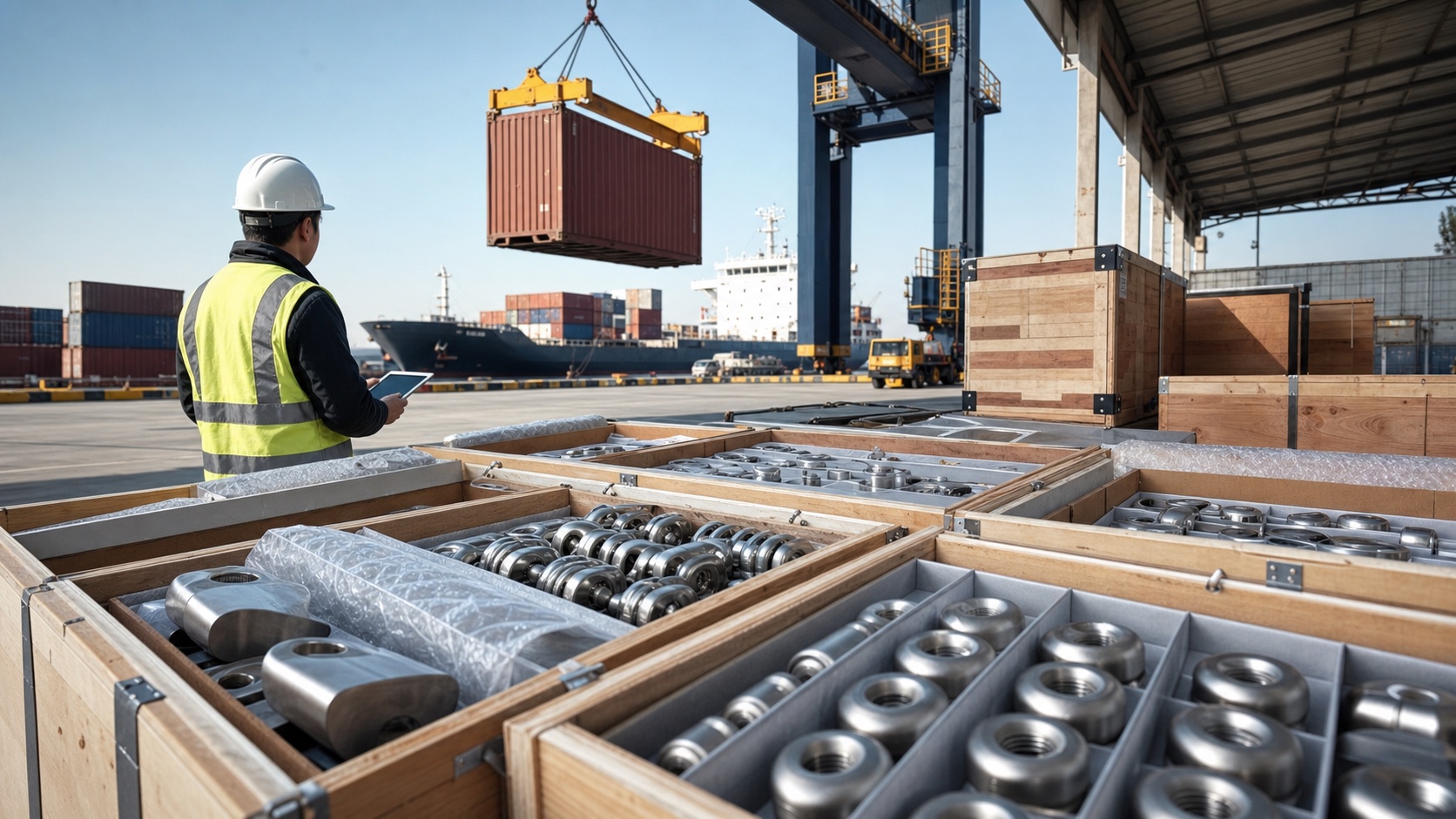
For overseas buyers,Sourcing stainless steel products from ChinaThe significance of procurement has long surpassed simply obtaining a competitive quote. What truly impacts project profits is the supplier's ability to consistently manage grade selection, forming and processing, surface treatment, batch traceability, export packaging, and international shipping. A batch of dimensionally correct polished parts damaged during sea transport, or a batch of on-time delivery parts lacking compliance documentation, can turn a "low procurement price" into a higher total cost.
The value of China's stainless steel industry lies precisely in its comprehensive delivery capabilities: abundant material supply, a collaborative chain encompassing casting, machining, stamping, welding, polishing, and packaging, all connected to a high-frequency international shipping network. This article does not discuss simply "where is cheaper," but rather explains the advantages of China's supply chain, feasible global shipping routes, and how importers can mitigate quality and logistical risks from a procurement decision-making perspective.
I. Why should we examine the entire supply chain when purchasing stainless steel products?
The performance of stainless steel products is often determined by multiple factors. Taking a pump valve casting, marine hardware connector, or architectural decorative component as an example, whether the material matches the usage environment is only the first step; subsequent factors include the casting or stamping process, CNC machining allowance, weld treatment, pickling and passivation or polishing effect, dimensional inspection, packaging protection, and export documentation.
Therefore, professional buyers assess not whether a factory can produce a single part, but whether it can consistently deliver the same standard in batches. China possesses mature industrial support and multi-process capabilities, which can reduce cross-regional order transfer and communication costs for projects requiring customization, modular processing, phased shipments, or long-term repeat purchases.
II. Advantages of China's Stainless Steel Manufacturing: The Actual Procurement Value Behind Scale
1. A wider range of material supply and manufacturing options.
According to data from the World Stainless Steel Association, China's crude stainless steel production in 2024 was...39.441 million tonsThe global total is 62.621 million tons; in the first three quarters of 2025, China's output will reach...30.453 million tonsThe volume increased by 4.71% year-on-year to 3T. While sheer size does not equate to high-quality products, it provides downstream manufacturers with a wider range of material and processing options, including common 304 and 316L stainless steels, as well as duplex stainless steel solutions for environments with strong corrosion or structural strength requirements.
2. Custom-made parts allow for centralized management of multiple processes.
forInvestment CastingFor components, machined parts, pipe fittings, marine hardware, and building hardware, overseas customers often require not only raw materials but also subsequent processing, surface treatment, assembly, and export packaging. Coordinating key processes within a manageable supply chain helps standardize drawing versions, reduce repeated transfers, and make quality inspection records easier to trace back to specific batches.
3. Experience in delivering overseas orders.
According to a report by Mysteel citing data from China's General Administration of Customs, China's stainless steel...Net exports reached 3.51 million tons, an increase of 11.91% year-on-year.This demonstrates that the stainless steel foreign trade supply chain is not an isolated incident: from English or multilingual communication, export packaging, packing documents to international freight coordination, there is long-term market demand driving its maturity.
III. What are the advantages of global shipping?
Stainless steel has a high density, and the value and weight of a single shipment can be relatively large. The transportation plan cannot simply follow the logic of small and light commodities, but must take into account the weight of the goods, surface protection, delivery time, and customs clearance conditions in the destination country.
1. High connectivity of international shipping networks, suitable for stable bulk orders.
Data from the United Nations Conference on Trade and Development (UNCTAD) on liner shipping connectivity indicates that China maintains a leading position in maritime networks across Asia and globally; its monthly data analysis up to December 2025 also shows that China continues to lead in connectivity. For heavy stainless steel cargo, this advantage means that bulk orders can typically enjoy a wider range of routes and schedules through container shipping.
2. Samples, replacement parts, and bulk orders can be arranged in layers.
Express delivery or air freightSuitable for samples, first article confirmation, emergency replacement parts, and small, high-value components, allowing customers to quickly verify the materials, dimensions, and assembly effect.
LCL (Less than Container Load) shippingSuitable for replenishment orders that are not yet full container loads but whose weight is unsuitable for air freight. Buyers should pay special attention to reinforcement, separation, and outer box markings to reduce damage caused by repeated handling.
Full Container Load (FCL) shippingSuitable for stable, high-volume shipments or finished products requiring high-quality preservation. Reducing transshipment and handling steps helps lower the risk of packaging damage and mixed-up goods.
3. Packaging is part of international delivery, not an additional item after shipment.
Mirror-finished, brushed, or finely machined sealing surfaces or exterior parts are particularly sensitive during transport. The purchase contract or technical confirmation should clearly specify: protective film or independent compartments, moisture-proof materials, applicable desiccants, rust and contamination prevention requirements, the strength of the wooden crate or pallet, the correspondence between box markings, batch labels, and packing lists. For ocean freight orders, the rework costs caused by substandard packaging often exceed the initial savings on shipping costs.
IV. Export compliance changes to watch out for starting in 2026
Overseas buyers should incorporate compliance capabilities into their initial due diligence when selecting Chinese stainless steel suppliers.January 1, 2026Since then, China has implemented export licensing for certain steel products. According to a public report based on a joint announcement by the Ministry of Commerce and the General Administration of Customs, when applying for an export license for goods listed in the catalog, foreign trade operators need to submit an export contract and a product quality inspection certificate issued by the manufacturer.
Purchasers should not determine whether a license is required solely based on the product name. Instead, they should confirm the specific product form, HS code, the exporter's ability to handle licensing procedures, and accompanying quality documents before placing an order. Furthermore, the destination country may have tariffs, anti-dumping or countervailing measures, product access standards, and origin documentation requirements. These should be verified by the buyer and their local customs broker in conjunction with the actual product.
V. Seven-Step Process for Purchasing Stainless Steel Products from China
Step 1: Clearly describe the use case before sending the inquiry.
A complete RFQ should include the usage environment, product drawings or key dimensions, target grade or applicable standards, manufacturing process requirements, dimensional tolerances, surface finish, order quantity and annual forecast, testing documents, packaging method, delivery destination, and desired trade terms. The more specific the purchasing information, the more comparable the quotations will be.
Step 2: Determine the grade based on corrosion and strength requirements.
For general indoor or mild environments, 304 stainless steel may be considered; for chlorine-containing environments, some food processing equipment, and coastal settings, 316 or 316L stainless steel often requires further evaluation; more stringent corrosion and load-bearing requirements may necessitate duplex stainless steel or specialized alloys. The grade decision should be based on the operating conditions, design standards, and risk level, rather than simply comparing material unit prices.
Step 3: Confirm the manufacturing scope and quality control methods
Inquire which processes will be completed by the supplier and which require outsourcing; confirm material traceability methods, key testing equipment, experience in similar projects, drawing version management, and rules for handling non-conforming products. For custom casting, stamping, or CNC parts, the ownership of the mold, first article confirmation, and mass production change notification should also be agreed upon.
Step 4: Verify with samples and documentation, not just promotional materials.
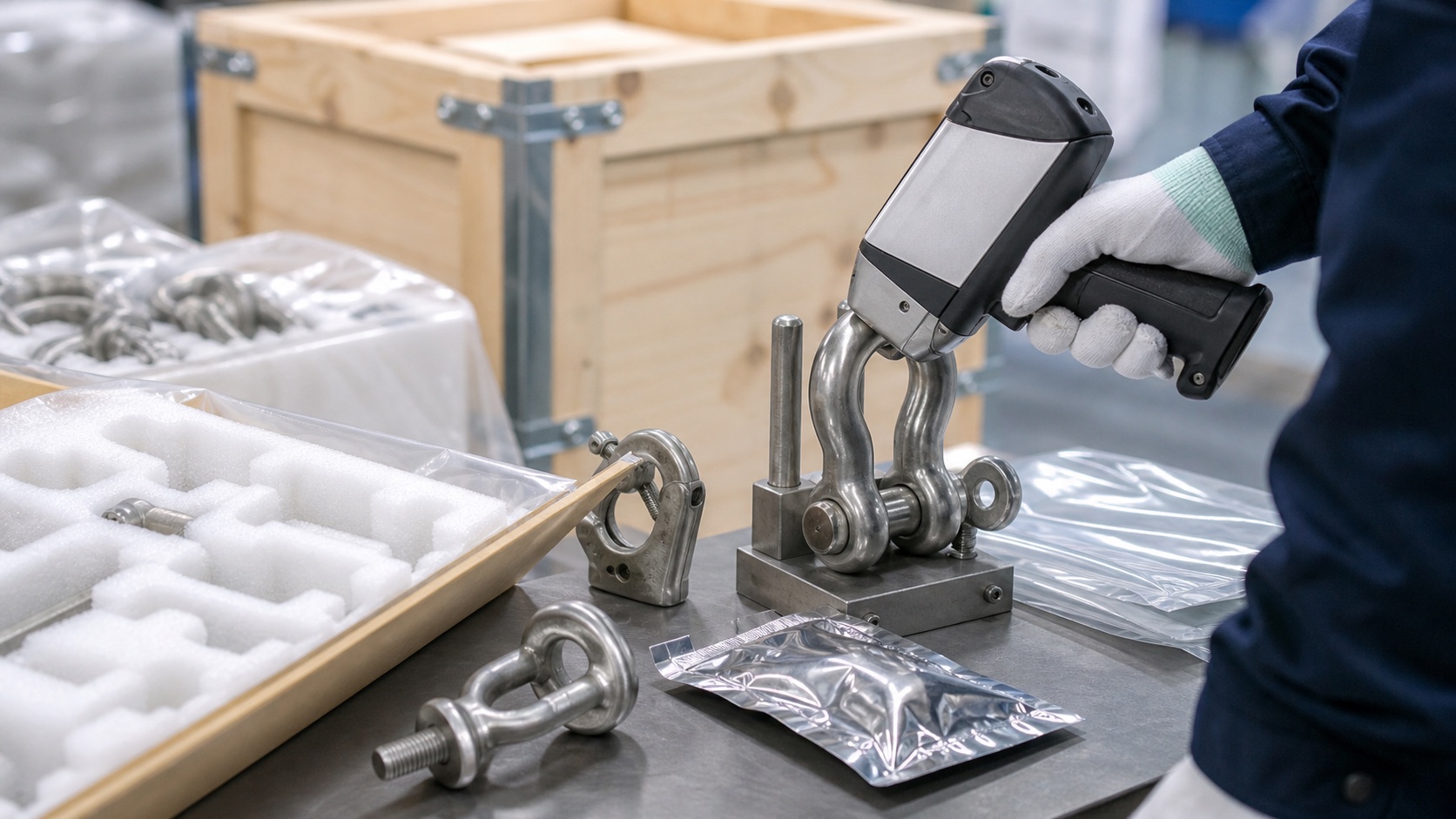
Before mass production of customized products, it is recommended to conduct sample or first-piece confirmation. Acceptance items may include material certificates or chemical composition testing, critical dimension reports, surface roughness or appearance standards, assembly tests, and agreed passivation, salt spray, or third-party inspection requirements. Confirmed samples should ideally be retained for comparison with subsequent batches.
Step 5: Compare total landed costs
When requesting a quote, the product price, tooling costs, quality inspection requirements, packaging, domestic shipping, export documents, international freight, and delivery terms should be broken down. At the same time, a professional customs clearance agency in the destination country should confirm HS classification, taxes, and potential trade remedy measures. Only by including logistics and compliance costs in the same table can quotes be truly comparable.
Step 6: Finalize the shipping and documentation list before completion.
Small batch confirmation shipments can be sent by express or air freight, while mass production orders are usually best shipped by sea. Before shipment, the commercial invoice, packing list, bill of lading or air waybill, material/inspection documents, certificate of origin (if applicable), shipping marks, and any required export license documents should be checked item by item. The earlier the documents are checked, the lower the probability of being forced to wait during customs clearance.
Step 7: Gradually standardize repeat purchase orders
Stable procurement relationships should be documented with records of drawing revisions, approved samples, quality reports, packaging standards, and shipping performance. Feedback after each delivery should be translated into actionable requirements for the next order, thus transforming supply chain advantages into long-term, replicable delivery results.
VI. Common Procurement Pitfalls: Four Cost Traps
Compare suppliers based solely on price per kilogram:Ignoring machining, surface quality, packaging, and destination country taxes will distort the actual cost.
No confirmed material standards or testing documents:Products that are also called "stainless steel" may be completely different in terms of specific grades, performance, and applicable working conditions.
Exquisite exterior parts are packaged in standard bulk packaging.Scratches, dents, and contamination can render qualified parts unusable upon delivery.
Customs clearance and permits were discussed just before shipment.If documentation or coding is not properly checked, delivery risks will be concentrated after the goods are completed.
VII. What documents should be prepared when communicating with Haijin Stainless Steel regarding procurement projects?
If you plan to purchase stainless steel precision castings, machined parts, architectural hardware, marine and connection system components, you can contact [the relevant authority/component].Haijin Stainless SteelProvide drawings or physical samples, the intended use environment, expected grade, order quantity, surface requirements, acceptance criteria, and destination. The more complete the information, the easier it will be for the supplier to match you with manufacturing routes, inspection points, packaging methods, and international shipping recommendations.
High-quality international sourcing is not just about shipping products "from China," but about ensuring that the materials, quality documents, packaging, and logistics all withstand scrutiny at the destination.
Source of information
- World Stainless Steel Association: Global Stainless Steel Crude Production Data for 2024Released on April 14, 2025.
- World Stainless Steel Association: Production Data for the First Three Quarters of 2025Released on November 27, 2025.
- Mysteel's 2025 report on China's net stainless steel exports, based on data from the General Administration of Customs.Released on January 20, 2026.
- UNCTADstat: Liner Shipping Connectivity AnalysisData updated to January 2026.
- Public reports from the Ministry of Commerce and the General Administration of Customs regarding the management of export licenses for certain steel productsDecember 12, 2025.
Relevant technical information and product examples
Continue to assess whether the materials, workmanship, and actual parts are suitable for your procurement needs.
- Process ComparisonHow to choose between silica sol process and water glass process?→
- Process ComparisonWhat are the differences between precision casting and powder metallurgy?→
- Quality requirementsPrecision casting surface roughness and polishing treatment→
- Product ExamplesCNC machining of industrial and mechanical parts casting→
Manufacturing process evaluation
We need to determine which manufacturing process is suitable for this part.
Please provide the structure, material, quantity, key dimensions, and surface requirements. We will conduct an evaluation based on precision casting, post-processing, CNC machining, and inspection.
- Assess wall thickness, fillet radius, and molding risks.
- Confirm casting allowance and post-machining location
- Select process based on quantity, quality and delivery time.
 WhatsApp: +86 158 9600 2001Scan the QR code or open WhatsApp to chat


