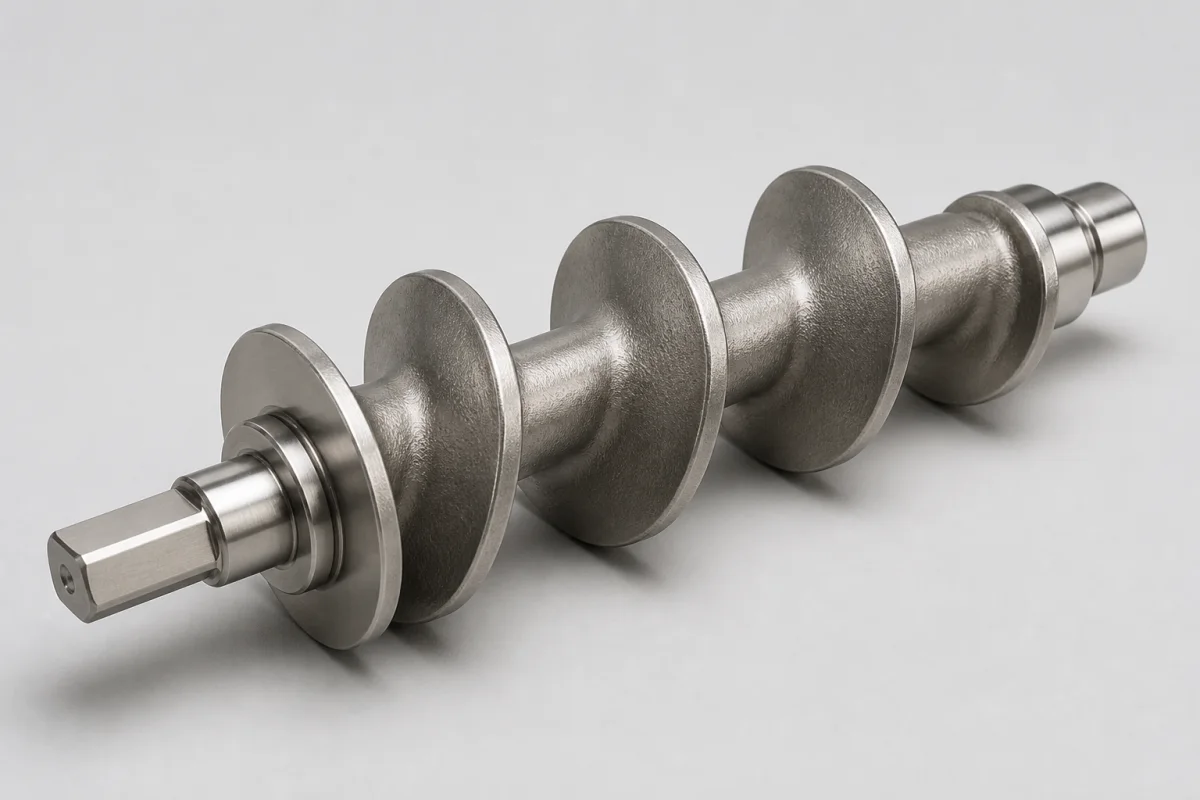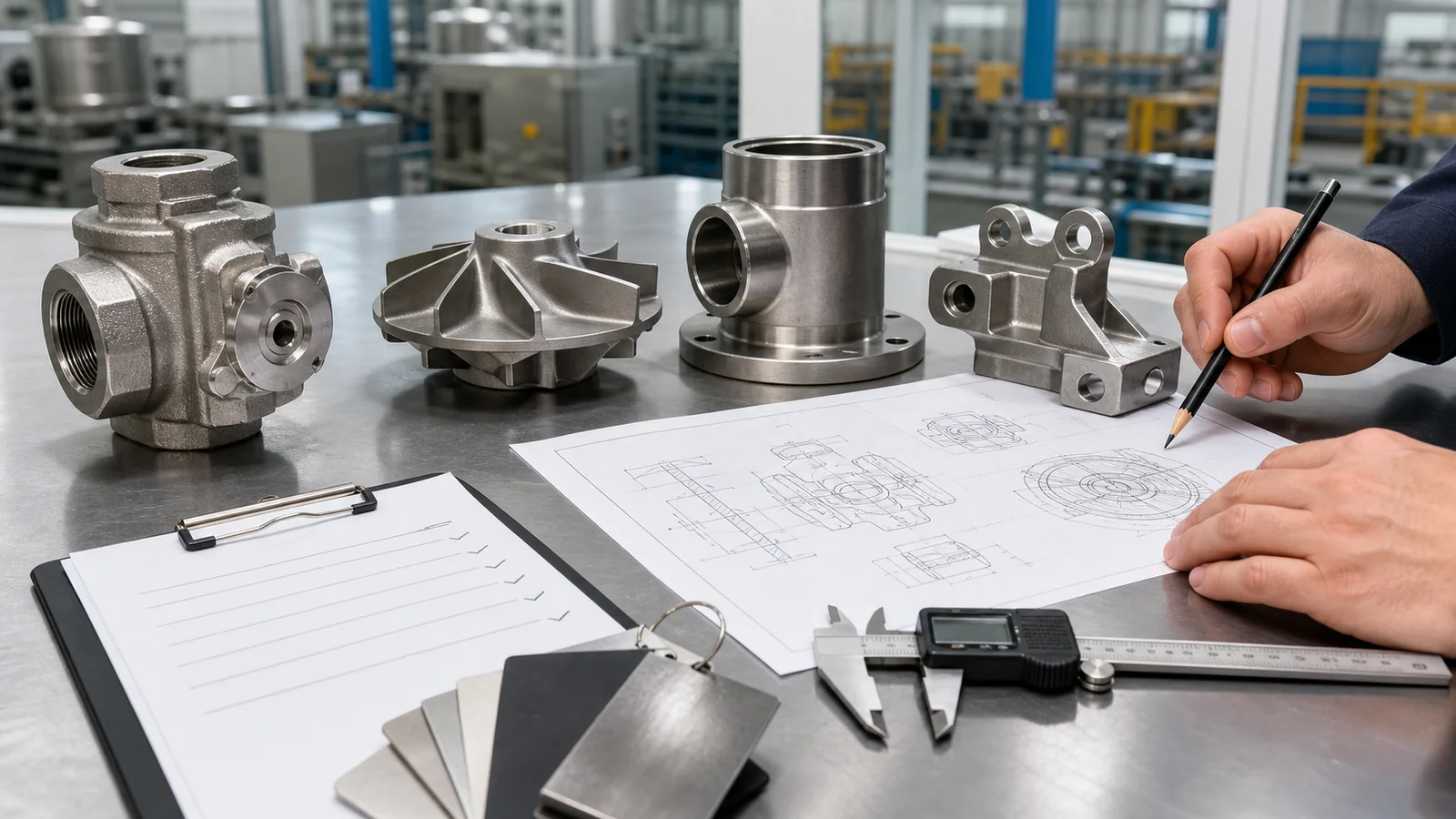











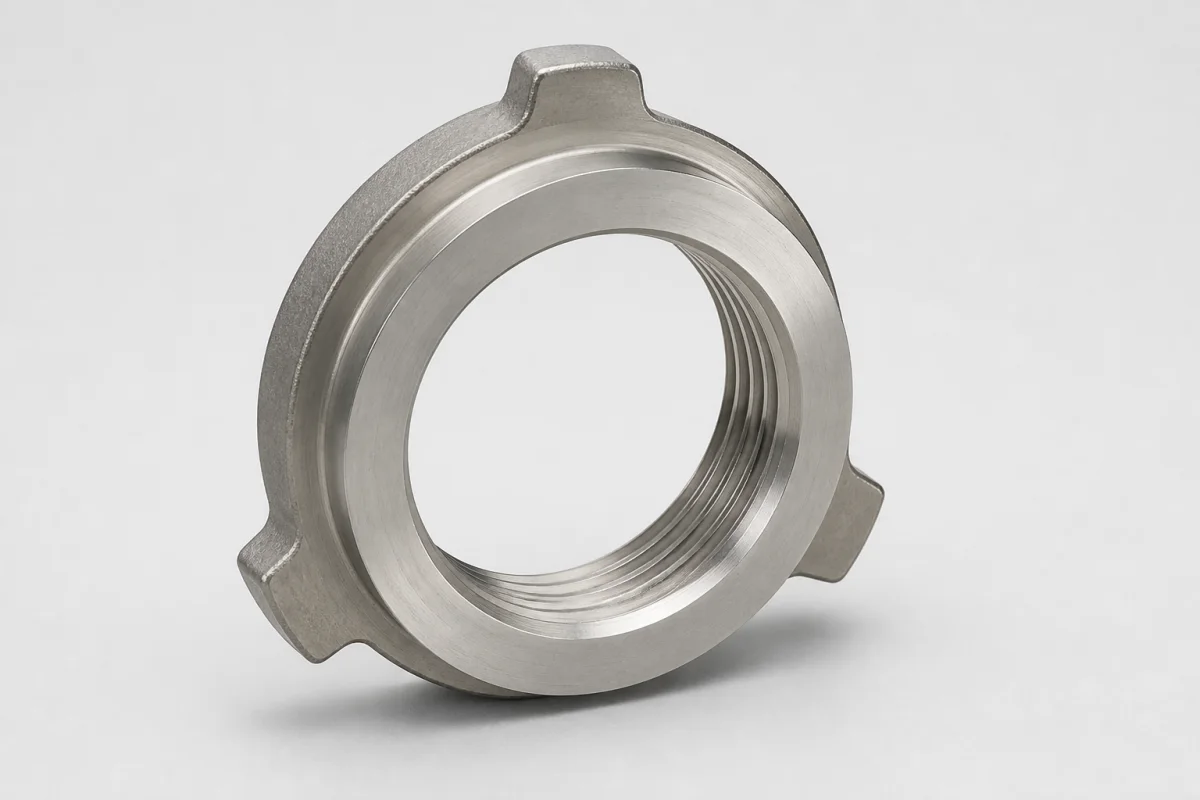
The stainless steel locking ring of a meat grinder is located at the front end of the equipment and is used to clamp the orifice plate, blade assembly, or related components. It is also often referred to as the front clamping nut, retaining ring, or locking nut. Although the part looks simple, it actually includes a large-diameter internal thread, a clamping end face, a stop, and an external wrench lug. The smoothness of assembly depends on the complete thread and end face dimension chain.
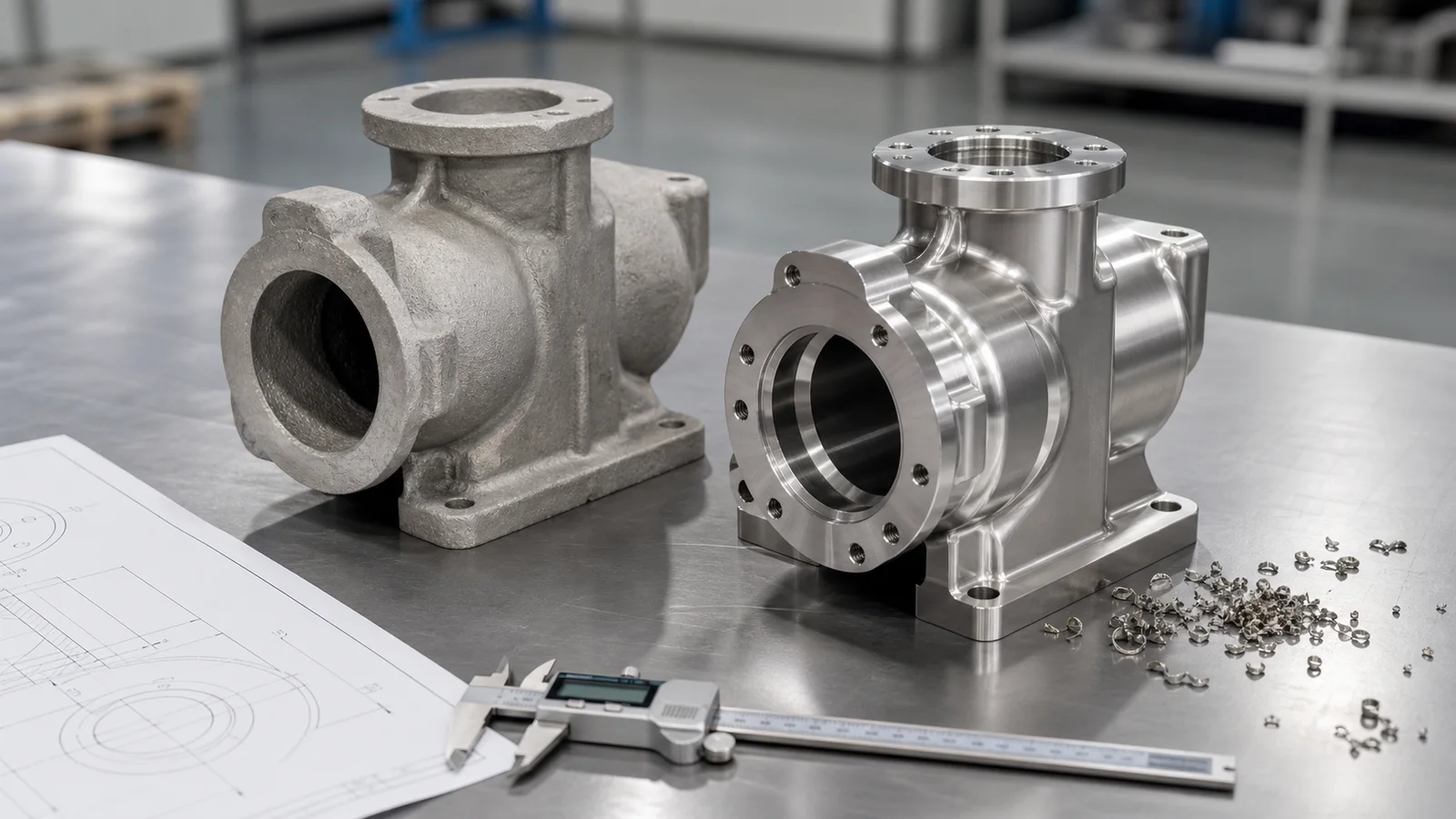
Haijin Stainless Steel supports evaluation of locking rings based on drawings or qualified samples. Thicker rings and lugs can be addressed using silica sol.Investment CastingOnce the parts are nearly formed, the internal threads, clamping end faces, and positioning stops are then machined using CNC machining to balance the complex shape, critical fits, and batch consistency.
Which parts of the locking ring are suitable for casting, and which parts need to be machined?
| Part | Recommended manufacturing approach | The drawings should be clear |
|---|---|---|
| Ring body and wrench lug | Precision casting achieves near-net-shape forming, focusing on fillets, thickness transitions, and mold filling. | Outer diameter, thickness, number and orientation of lugs, and stress boundary |
| Large diameter internal thread | After leaving a margin in the blank, CNC machining is performed to remove burrs and inspect the workpiece. | Thread standard, diameter, pitch, direction of rotation, and effective length |
| Clamping end face | Machine the end face or stop according to the assembly relationship. | Datum, flatness, end face runout and clamping position |
| Appearance and Cleaning Surface | Sandblasting, passivation, polishing, or cleaning as required. | Roughness, permissible defects, cleaning and packaging requirements |
This page cannot provide a "universal thread" suitable for all meat grinders. The diameter, pitch, thread profile, direction of rotation, and clamping structure may vary between different machines; please refer to customer drawings or confirmed parts for the correct specifications.
Why is machining large-diameter internal threads a key focus?
Locking rings require repeated disassembly and cleaning. Overly tight internal threads will increase installation and removal difficulties, while overly loose threads may affect clamping and operational stability; burrs, dents, or incomplete thread profiles can also damage the matching external threads. It is recommended to confirm the following during drawing review:
- Metric, imperial, trapezoidal, or customer-specific tooth profiles are available.
- Nominal diameter, pitch, direction of rotation, and effective engagement length;
- Thread inlet chamfer, retraction position, and permissible incomplete teeth;
- Use thread gauges, matching parts, or other agreed-upon methods for inspection;
- The runout and position requirements of the clamping end face relative to the thread axis.
For replicating old parts, simply measuring the worn locking ring may not be sufficient to restore the original design. When possible, the matching machine head external thread, orifice plate thickness, and actual clamping position should also be provided to reduce the risk of "the thread can be screwed in but cannot be properly clamped."
How to prevent cracking and deformation of the lug and ring of a wrench?
The external lugs bear the loading and unloading torque, and sharp corners or sudden thickness changes should not form at the lug root. The casting plan will be evaluated in conjunction with lug fillet radius, ring wall thickness, pouring feeding, and subsequent correction. The purchaser should also specify whether a manual wrench, special tools, or other loading and unloading method is used to avoid unspecified impact loads.
After the precision casting blank is completed, a stable reference needs to be established for the end face and thread machining. If the thread is machined first and the lug is clamped in an unreasonable manner, it may cause local stress or deformation; therefore, the machining sequence, soft jaws or special fixtures should be determined in combination with the product structure.
How are materials and surface treatments confirmed?
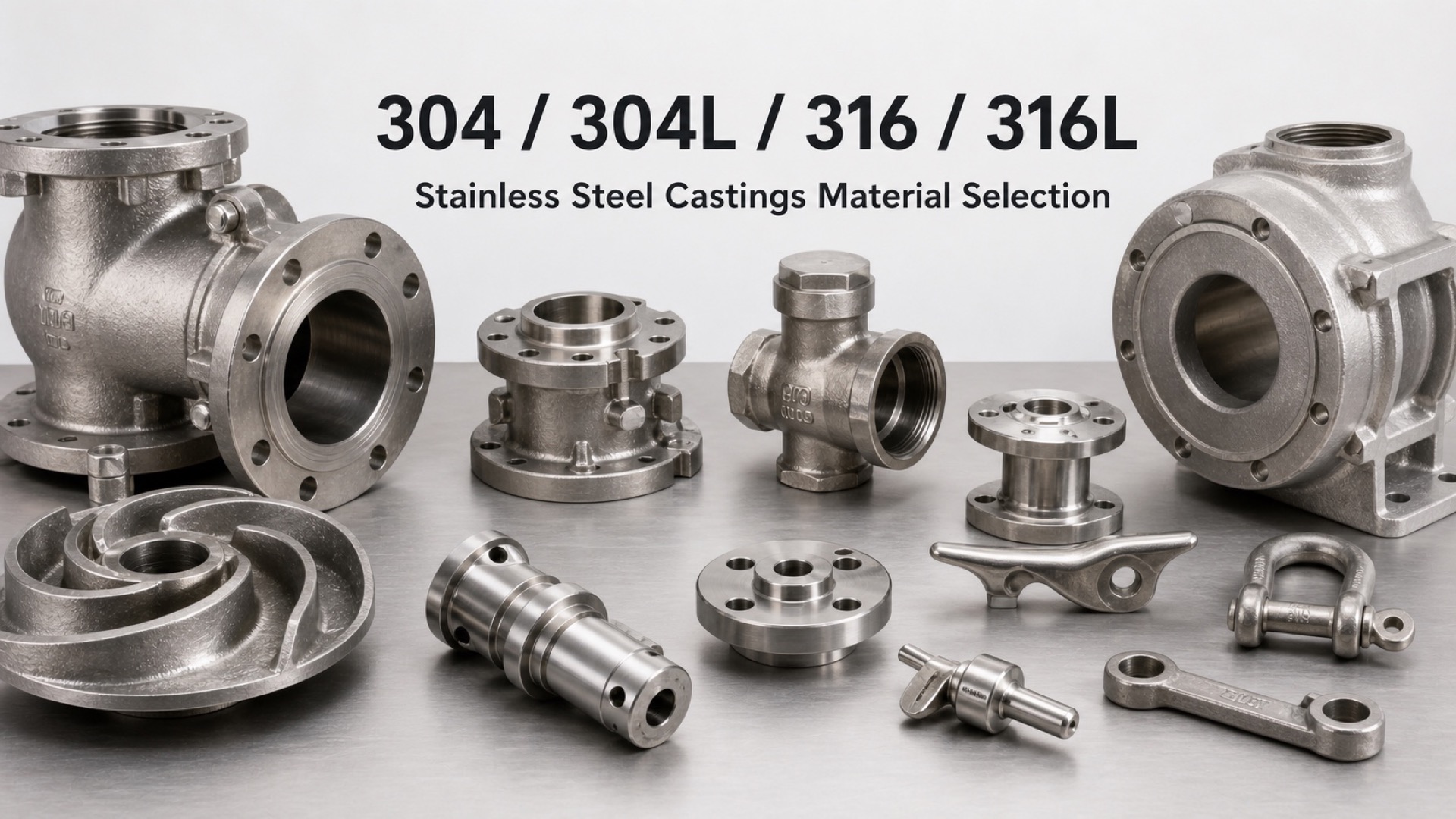
304 is suitable for many routine food processing machinery environments; for cleaning media, high salt content, or corrosive conditions, 316 or 316L can be further discussed. The final material should be supplied according to drawings and customer standards. Sandblasting, pickling and passivation, polishing, and cleaning treatments should also be selected based on the actual contact area, appearance, and acceptance requirements, and should not be based solely on pictures.
If the project involves specific food contact regulations, material certifications, surface roughness, or cleaning validations, these should be specified before providing a quote. Material grade and surface gloss alone cannot prove that a product meets a particular regulation or certification.
Key Inspection Points in Mass Production of Locking Rings
- Check the material, casting appearance, lug integrity, and obvious deformation;
- Inspect the internal thread profile, effective length, entry point, and burrs;
- Verify the clamping end face, stop, and key assembly dimensions;
- Confirm the assembly using the agreed-upon measuring tools, thread gauges, or accessories;
- Check the surface finish, cleanliness, quantity, and packaging markings.
Meat grinder clamping nutRequest for Quotation
- Complete 2D drawings and 3D models, or locking rings and matching machine head samples;
- Internal thread standards, diameter, pitch, direction of rotation, and inspection methods;
- Requirements for clamping end face, stop, lug and assembly dimensions;
- Material grade, surface treatment, cleaning and documentation requirements;
- Sample quantity, batch size, annual usage, and target delivery date.
Customization requiredmeat grinder locking ringOr is it the front-end clamping nut?It is possibleSend drawings and photos of components via WeChatorOnline inquiry pageUpload file. More related content can be viewed.Stainless steel parts for meat grinders、CNC machining capability与Quality control。
Frequently Asked Questions
Can I directly copy the old locking ring?
An evaluation can be made based on a sample first, but it is necessary to confirm whether the old part has been worn, deformed, or repaired. When threads and clamping positions are involved, it is best to provide the matching external threads and assembly relationship at the same time.
Can internal threads be cast directly without machining?
Whether it is feasible depends on the thread size, tooth profile, and assembly requirements. For large-diameter functional threads that require stable and repeated disassembly and assembly, it is generally recommended to allow for machining and inspect according to the agreed method.
Can I buy the locking ring in the picture directly?
The images on this page are used to demonstrate the structure and manufacturing process. Haijin primarily focuses on custom-made parts based on provided drawings and does not guarantee that parts shown in the images are compatible with any particular brand or model.
Relevant technical information and product examples
Continue to assess whether the materials, workmanship, and actual parts are suitable for your procurement needs.
- Tolerance dataComparison of CNC Machining Tolerance Standards and Selection→
- Tolerance dataInternational tolerance standard for CNC machining: ISO 2768→
- Surface requirementsComparison of Ra, Ry, Rz with polishing treatment→
- Product ExamplesCNC machining of stainless steel precision casting mechanical parts→
Size and processing assessment
Are there any critical dimensions or CNC machining requirements?
Please provide drawings, materials, quantities, and key tolerances. We will conduct an evaluation based on the condition of the blank, clamping method, processing steps, and inspection requirements.
- Confirm machining datum and clamping method
- Evaluate hole positions, threads, and mating surface tolerances.
- Coordinate casting blanks with CNC machining allowances
 WhatsApp: +86 158 9600 2001Scan the QR code or open WhatsApp to chat