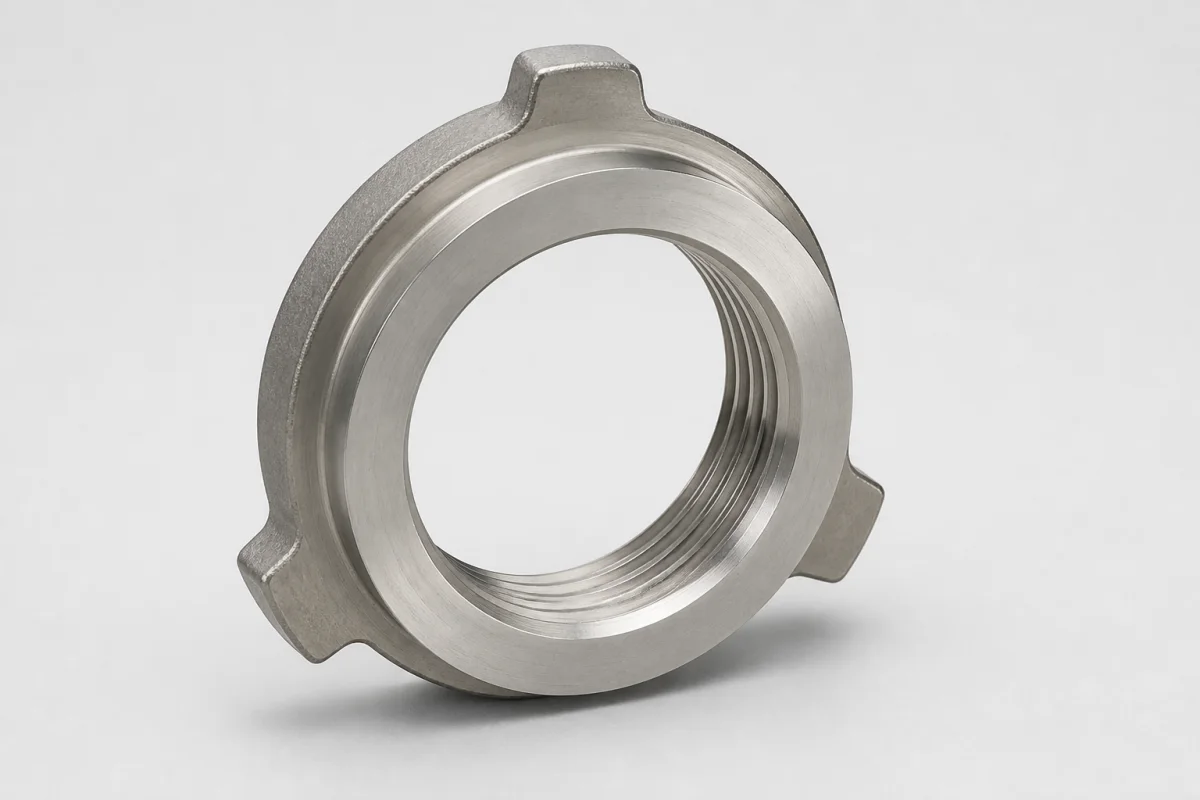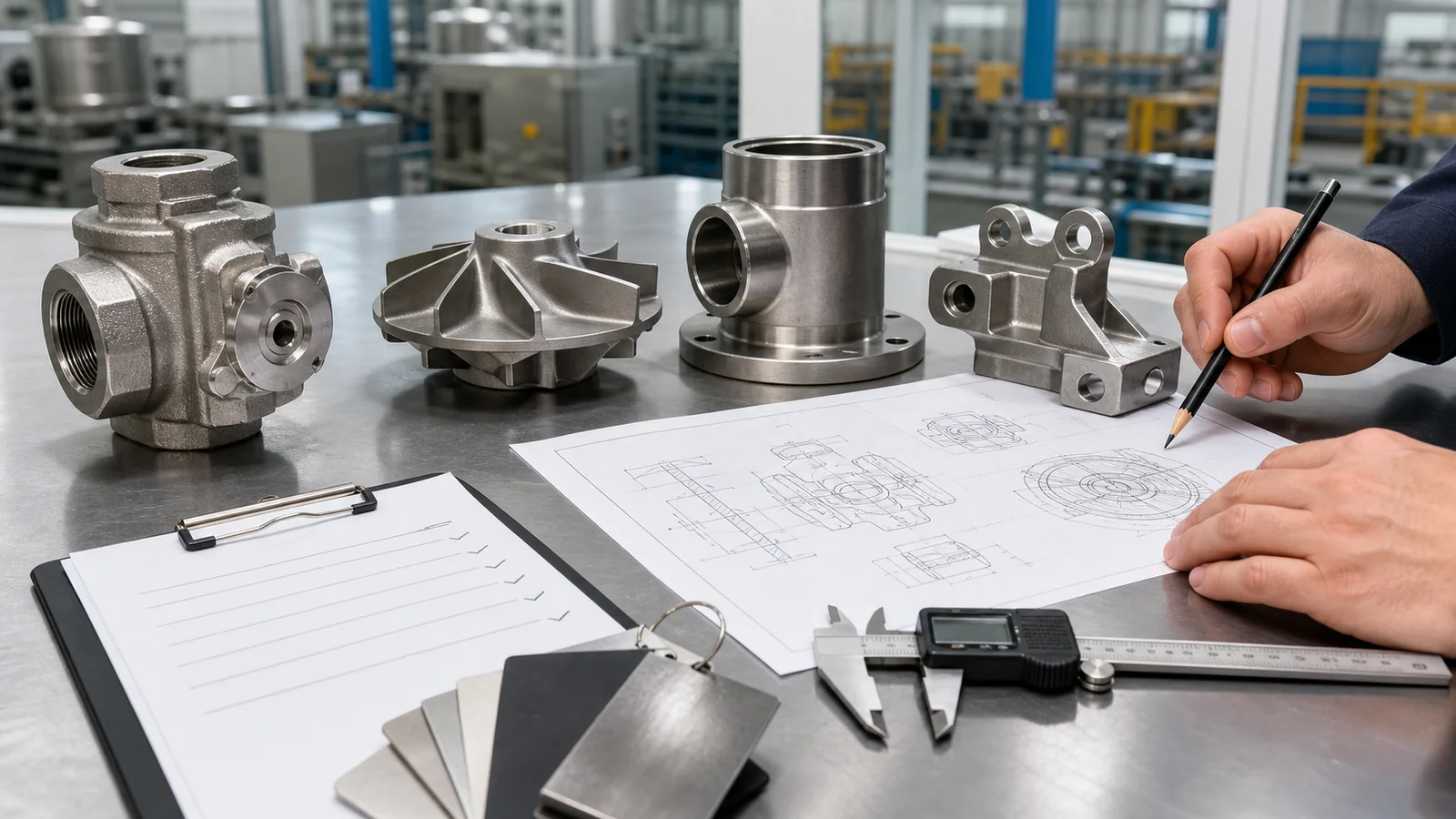











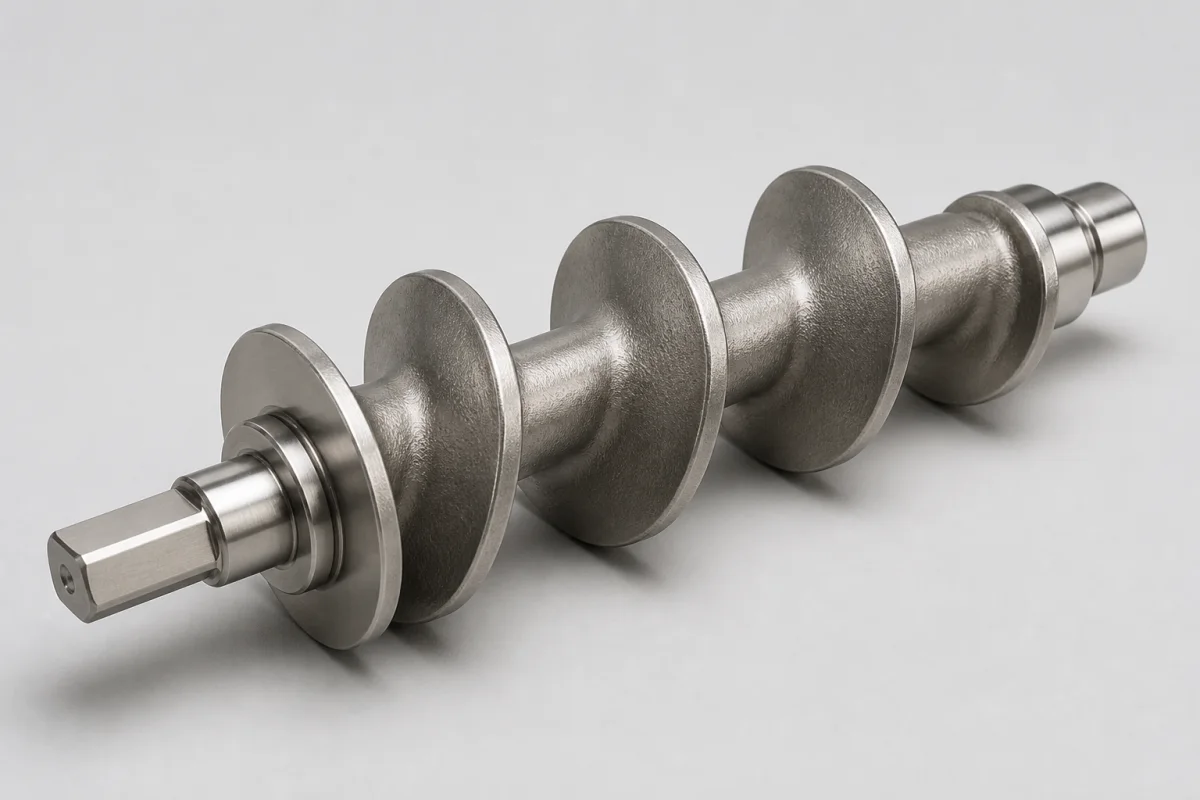
The stainless steel auger for meat grinders, also known as a screw propeller, feeding screw, or meat grinder screw, is responsible for steadily pushing materials towards the blade assembly and orifice plate. It is not an ordinary screw component that can be priced simply by looking at its appearance: the outer diameter of the auger, the pitch, the direction of rotation, the size of the mandrel, the shaft end interface, and the assembly clearance all affect the feeding state, running resistance, and the overall assembly of the machine.
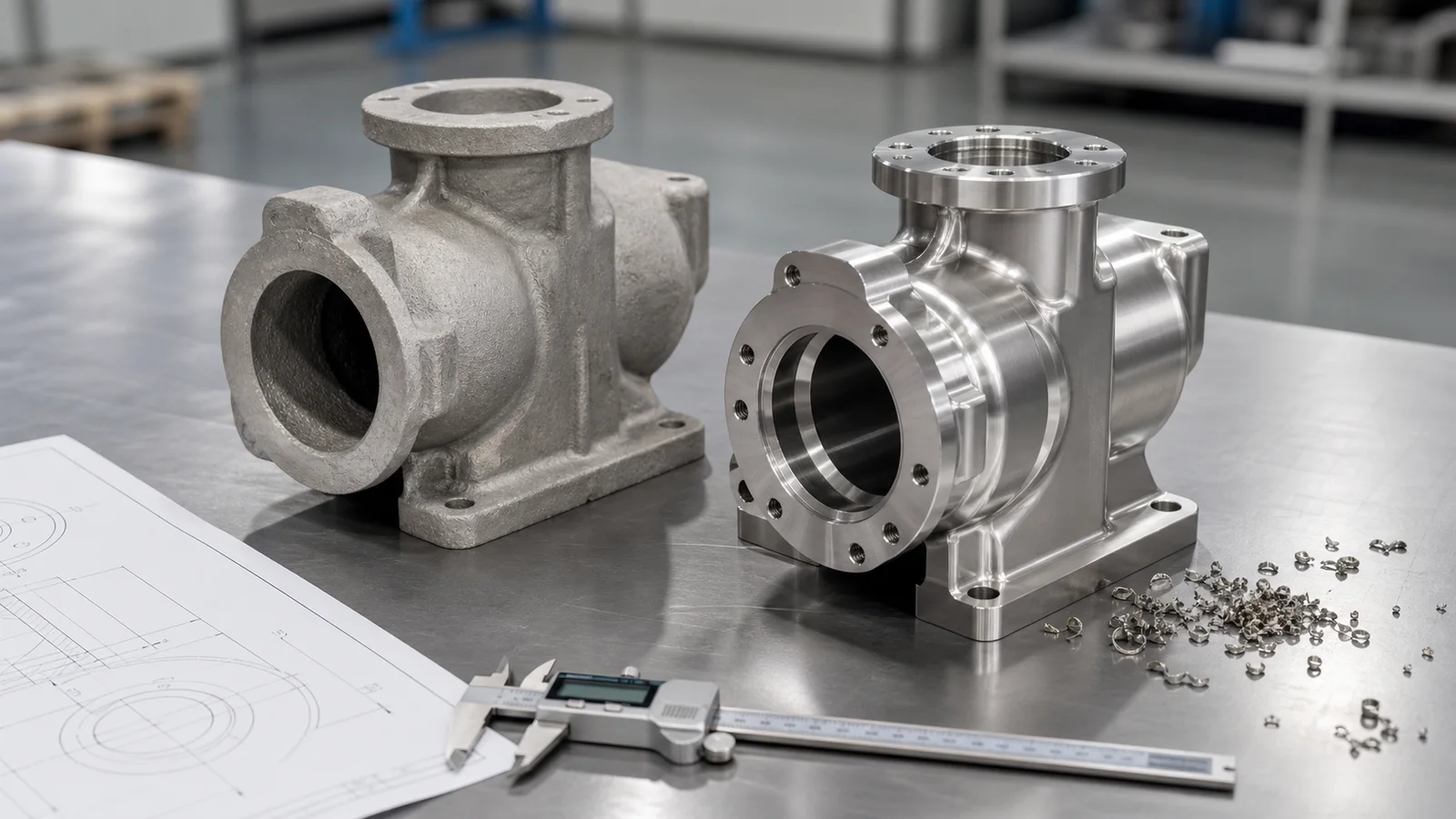
Haijin Stainless Steel provides services to food machinery manufacturers and parts purchasers.Meat grinder augerEvaluation based on provided drawings and samples. For structures suitable for near-net-shape forming, silica sol can be used.Investment CastingObtain the main body of the spiral, and then perform functional positioning on the journal, end face, square shaft, or spline, etc.CNC Machining。
Why are meat grinder augers suitable for precision casting and CNC machining?
Screwdrivers feature continuous curved surfaces, helical blades, and multiple shaft diameters. If cut entirely from solid bar stock, the material removal and machining time could be substantial. Precision casting can first create a near-finished helical profile, followed by CNC machining and centralized processing of assembly and transmission positions. However, whether casting is suitable still depends on factors such as minimum wall thickness, blade transitions, overall length, unit weight, and purchase volume.
| Structural position | Manufacturing focus | Common Confirmation Content |
|---|---|---|
| Spiral blades | Filling, fillet transition, blade integrity and deformation control | Outer diameter, pitch, direction of rotation, blade thickness and profile |
| Central shaft and journal | Allow for machining allowances and establish stable clamping and inspection standards. | Shaft diameter, coaxiality, circular runout and end face position |
| Transmission interface | Arrange turning, milling, or other post-processing according to the structure. | Square shaft, keyway, spline or customer-specified interface |
| working surface | Remove burrs and residue, and treat the surface as agreed. | Roughness, polishing, passivation, cleaning and acceptance requirements |
What dimensions need to be carefully reviewed during the drawing review?
- Spiral outer diameter and barrel clearance:The dimensions should be confirmed together with the matching cylinder; the dimensions of the auger alone should not be provided.
- Pitch and direction of rotation:Indicate whether it is left-handed or right-handed, and specify whether there are variable pitch or different feeding sections;
- Axial reference:Confirm the dimensional chain between the drive end, the tool assembly end, and the positioning step;
- Transmission interface:Square shafts, keyways, splines, or other interfaces should provide complete dimensions and fit requirements;
- Functional tolerance:Coaxiality, runout, and fit tolerances should be marked at the locations that actually affect the assembly; it is not recommended to apply overly tight tolerances to the entire part.
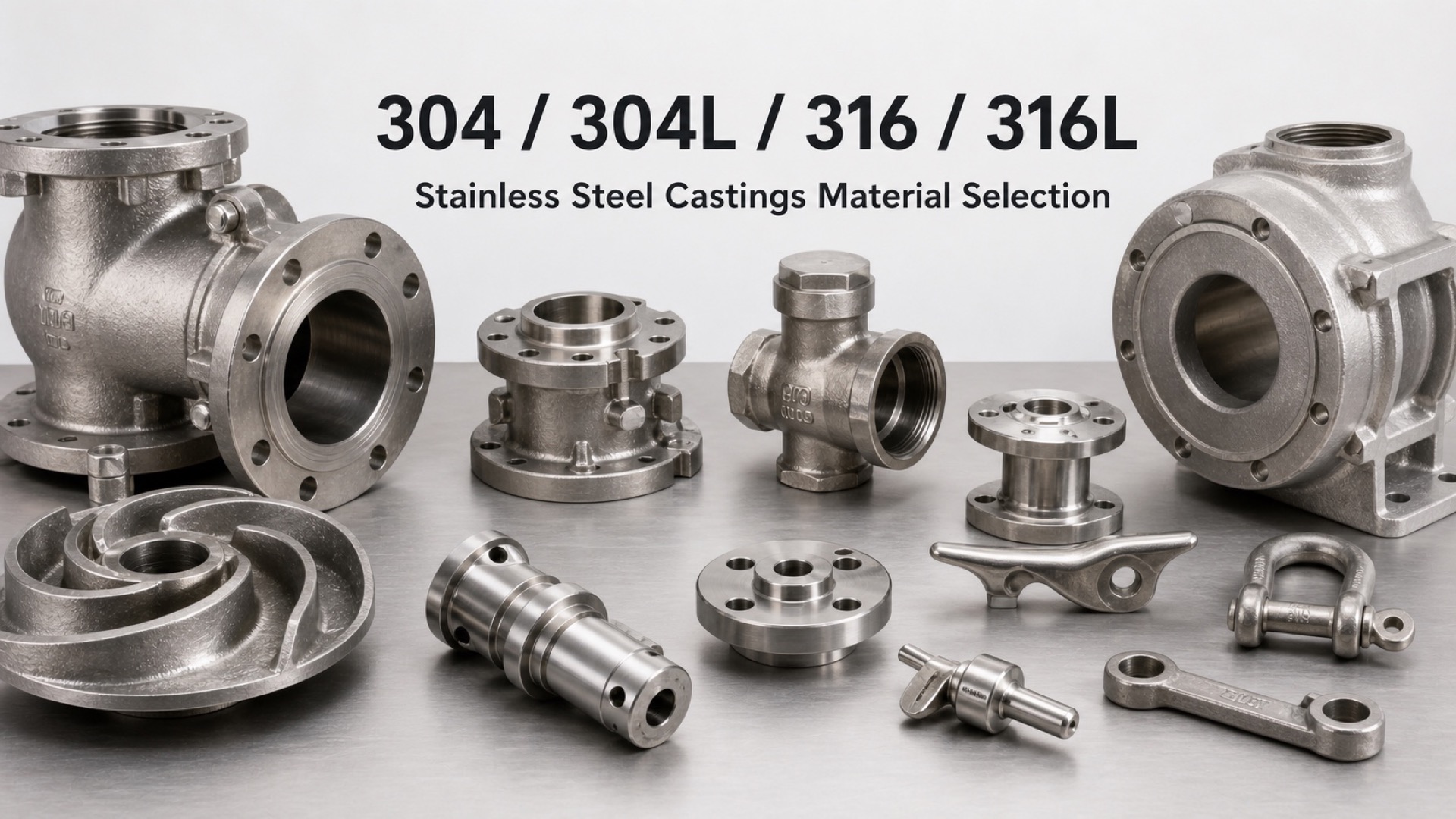
How to choose between 304, 316, and 316L?
304 is a common stainless steel grade; when the cleaning medium, salt content, or corrosion requirements are higher, 316 or 316L can be further evaluated. Material selection should not be based solely on the words "food machinery," but should ultimately be confirmed according to customer drawings, material standards, contact media, cleaning methods, and operating environment. A particular stainless steel grade does not automatically indicate that the product meets specific food contact regulations or certifications; relevant requirements should be clarified during the inquiry and contract stages.
Quality control from casting blanks to finished products
- Review the three-dimensional structure, spiral transition, parting line, and machining allowance;
- Confirm material standards, smelting processes, and necessary material testing requirements;
- Check the integrity, deformation, and reference positions of the blank blades for machining.
- Machining of journals, end faces, and transmission interfaces, and verification of critical dimensions;
- Deburring, surface treatment, cleaning, and packaging will be performed as agreed.
For augers requiring long-term compatibility, it is recommended that customers provide the matching barrel, cutter set, or assembly dimensions. Replicating only a worn old sample may introduce existing wear into the new product; therefore, when reproducing old parts, the original dimensions or a confirmed allowable correction range should be provided.
What information is required to inquire about a meat grinder auger?
- 2D drawings and 3D models such as STEP and STP, or verifiable qualified samples;
- Material grade, applicable standards, and cleaning environment;
- outer diameter of the helix, pitch, direction of rotation, overall length, and shaft end interface;
- Key tolerances, surface requirements, and inspection documentation requirements;
- Sample quantity, batch quantity, estimated annual usage, and expected delivery date.
Do you have drawings or old samples of a meat grinder auger that need to be evaluated?It is possibleSend drawings and photos via WeChat, or enterOnline inquiry pageSubmit your 3D file. You can also view...Stainless steel parts for meat grinders、Customization capabilities for stainless steel castings和Quality control items。
Frequently Asked Questions
Can we just purchase the auger casting blanks?
We can discuss the delivery of the blank based on the drawings, or we can have Haijin perform CNC machining on the key shaft ends and assembly surfaces. Before providing a quote, the blank dimensions, machining allowance, and final liability boundaries need to be clearly defined.
Can an old auger be surveyed without complete blueprints?
We can provide photos of the old parts, basic dimensions, and information about the equipment used for preliminary assessment. Before formal production, we still need to confirm wear and tear repairs, fit relationships, materials, and acceptance standards.
Is the auger in the picture a standard part that is readily available?
No. The images on this page are for showcasing the structure and manufacturing process. Haijin primarily manufactures according to customer drawings, samples, and purchasing requirements, and does not guarantee that the products shown in the images are compatible with any particular brand or model.
Relevant technical information and product examples
Continue to assess whether the materials, workmanship, and actual parts are suitable for your procurement needs.
- Tolerance dataComparison of CNC Machining Tolerance Standards and Selection→
- Tolerance dataInternational tolerance standard for CNC machining: ISO 2768→
- Surface requirementsComparison of Ra, Ry, Rz with polishing treatment→
- Product ExamplesCNC machining of stainless steel precision casting mechanical parts→
Size and processing assessment
Are there any critical dimensions or CNC machining requirements?
Please provide drawings, materials, quantities, and key tolerances. We will conduct an evaluation based on the condition of the blank, clamping method, processing steps, and inspection requirements.
- Confirm machining datum and clamping method
- Evaluate hole positions, threads, and mating surface tolerances.
- Coordinate casting blanks with CNC machining allowances
 WhatsApp: +86 158 9600 2001Scan the QR code or open WhatsApp to chat