











In procurement drawings, BOM lists, or customer inquiries, 304, 316, and 316L stainless steel are often compared side-by-side. They are all austenitic stainless steels, appear similar, and have similar processing methods, but they are not entirely the same in terms of corrosion resistance, welding risks, material costs, and applicable environments. For procurement engineers, mechanical engineers, product design engineers, and procurement managers of equipment manufacturing companies, choosing the wrong material can affect component lifespan, export certifications, after-sales risks, and overall machine reliability.
Table of contents
- What is 304 stainless steel?
- What is 316 stainless steel?
- What is 316L stainless steel?
- Comparison of chemical composition of 304, 316, and 316L
- Performance comparison of 304, 316, and 316L
- How to choose between different industries
- How to select materials for precision castings
- Frequently Asked Questions (FAQ)
- Summarize
What is 304 stainless steel?
304 stainless steel is the most widely used austenitic stainless steel. Its typical composition is approximately 18% of chromium and 8% of nickel, hence it is often referred to as 18-8 stainless steel. It boasts well-balanced overall performance, good resistance to atmospheric corrosion, mature cold working and welding properties, stable material supply, and relatively controllable prices. It is widely used in food processing machinery, general machinery, building hardware, and other stainless steel applications.Investment CastingThe default selection for the part.
The advantage of 304 stainless steel lies not in being the "strongest," but in being "sufficient, stable, and easy to procure." In indoor, freshwater, general food contact, and typical industrial environments, 304 typically meets design requirements. Food processing equipment extensively uses 304 primarily because its surface is easy to clean, its supply chain is mature, and its processing costs are lower than the 316 series. For scenarios without high chloride ion concentrations, strong acids, seawater, or prolonged salt spray, choosing 304 is often more economical.
What is 316 stainless steel?
316 stainless steel is made by increasing the nickel content of 304 and adding approximately 2%-3% of molybdenum. Molybdenum is key to understanding the difference between 304 and 316: it significantly improves the material's resistance to pitting corrosion, crevice corrosion, and chloride ion corrosion. In other words, in ordinary environments, 304 and 316 may appear similar, but in marine environments, chemical piping, marine hardware, salt spray environments, chlorine-containing cleaning agents, or some acidic media, 316 offers a higher safety margin.
Why is 316 stainless steel more expensive than 304 stainless steel? The main reason is its higher nickel and molybdenum content, with molybdenum being a cost-sensitive alloying element. 316 is also frequently used in more demanding applications, where customers have higher requirements for material certification, corrosion resistance, and testing standards, all of which are reflected in the procurement cost. Therefore, 316 is not simply a "higher-grade version of 304," but rather a material choice specifically for applications with higher chloride ion and corrosion risks.
What is 316L stainless steel?
316L stainless steel can be understood as a low-carbon version of 316. The "L" stands for Low Carbon. The carbon content of ordinary 316 is typically controlled below 0.08%, while 316L is generally controlled below 0.03%. With a lower carbon content, the risk of chromium carbide formation during welding or in the high-temperature heat-affected zone decreases. Therefore, 316L is particularly suitable for welded structures, complex structures, and parts with high corrosion resistance requirements.
The key difference between 316 and 316L is not room temperature strength, but rather post-weld corrosion resistance. In most cases, 316L can replace 316, especially in welded parts, marine hardware, medical devices, chemical equipment, and 316L precision castings. However, if the drawings explicitly require 316, the drawings should be followed, and substitution should not be based solely on experience.
Comparison of chemical composition of 304, 316, and 316L
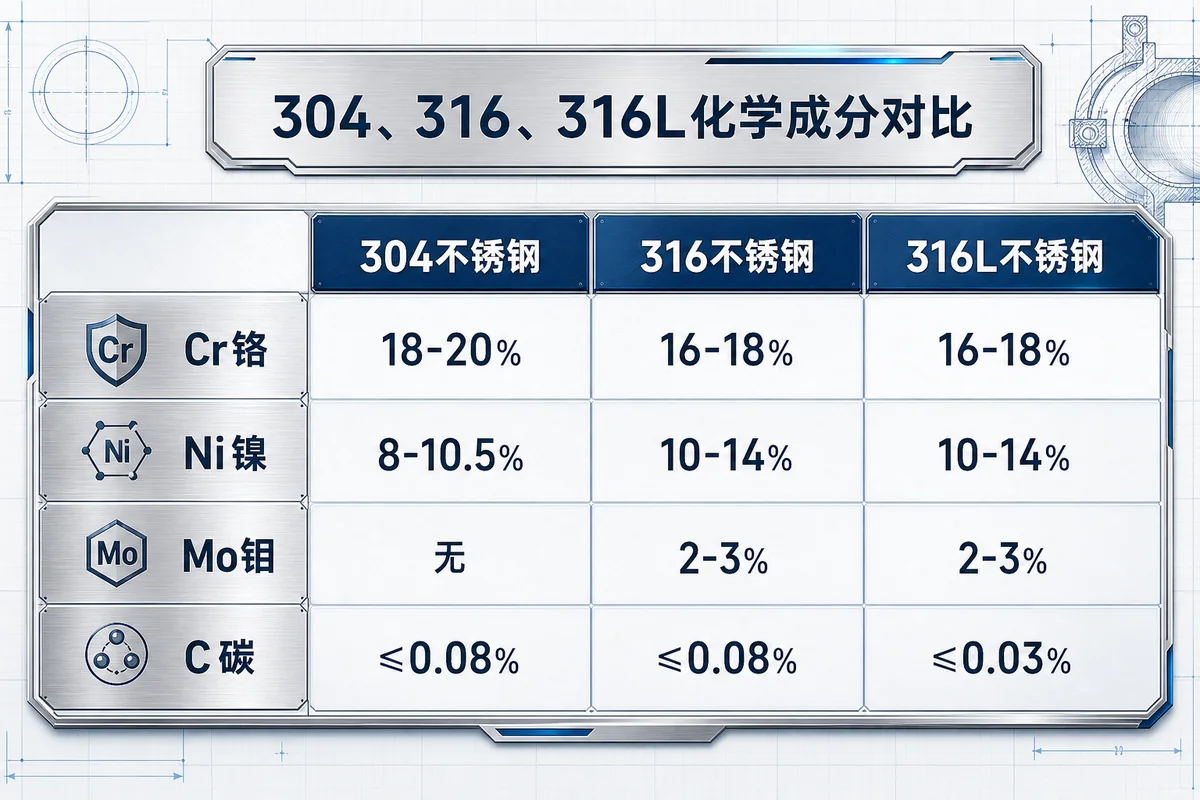
| Material | Chromium (Cr) | NickelNi | Molybdenum | Carbon C | Material selection focus |
|---|---|---|---|---|---|
| 304 stainless steel | Approximately 18%-20% | Approximately 81 TP3T - 10.51 TP3T | Normally not added | ≤0.08% | It is versatile, moderately priced, and suitable for general environments. |
| 316 stainless steel | Approximately 16%-18% | Approximately 10%-14% | Approximately 2%-3% | ≤0.08% | Its resistance to chloride ion corrosion is better than that of 304. |
| 316L stainless steel | Approximately 16%-18% | Approximately 10%-14% | Approximately 2%-3% | ≤0.03% | Low carbon content, more stable in welding and resistance to intergranular corrosion |
In terms of composition, the main difference between 304 and 316 is that 316 contains molybdenum and has a higher nickel content; the main difference between 316 and 316L is that 316L has a lower carbon content. These elemental differences will be amplified in corrosive environments, welding environments, and long-term service.
Performance comparison of 304, 316, and 316L
| Comparison Projects | 304 stainless steel | 316 stainless steel | 316L stainless steel |
|---|---|---|---|
| Corrosion resistance | Suitable for general atmospheric, freshwater, and food environments. | Better resistance to chloride ions, salt spray and localized corrosion | The 316 grade is closer to the weld standard, resulting in better stability after welding. |
| Mechanical properties | Stable overall performance | Similar to 304, with slight differences under some standards. | Low carbon footprint may result in slightly lower strength indicators, but the engineering impact is usually manageable. |
| Welding performance | It is weldable, but attention should be paid to intergranular corrosion for thick parts or in sensitized environments. | Weldable, with better corrosion resistance than 304 stainless steel. | More suitable for welded structures and parts that are inconvenient to solution treat after welding. |
| price | The lowest of the three | Higher than 304 | Typically close to or slightly higher than 316, depending on specifications and availability. |
| Application areas | Food processing machinery, kitchen equipment, general hardware, and general mechanical parts | Marine hardware, chemical parts, salt spray environment components | Marine environment, welded parts, medical, chemical, 316L precision castings |
If the working environment involves only indoor equipment, dry atmosphere, or ordinary food contact, 304 stainless steel is usually sufficient. If the parts are near the sea, exposed to salt spray, seawater, chlorine-containing cleaning agents, or acidic media, 316 or 316L stainless steel is more reliable. 316 or 316L is recommended for marine environments because chloride ions in the air can damage the passivation film on the stainless steel surface; 304 is more prone to rust, pitting, and crevice corrosion in such environments.
How to choose between different industries
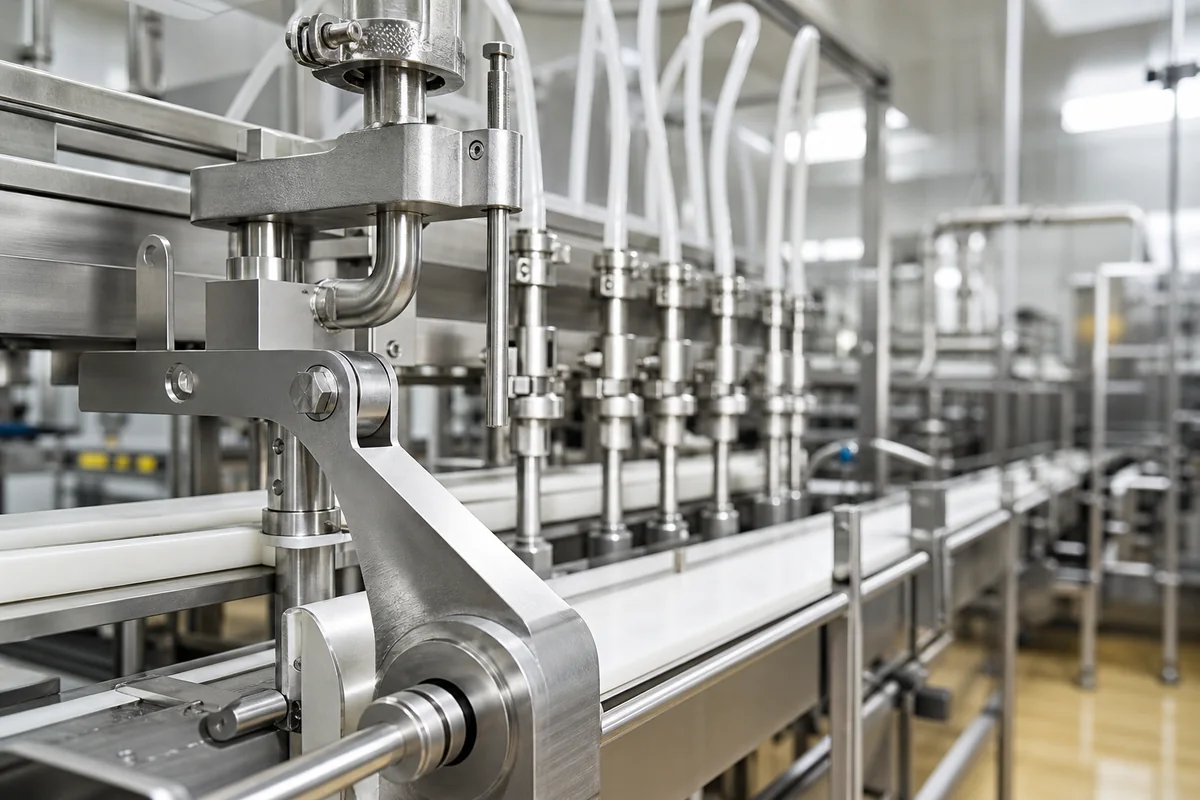
The widespread use of 304 stainless steel in the food machinery industry does not mean that all food-grade stainless steel is 304. "Food-grade" more accurately refers to materials, surface finish, cleaning methods, and relevant standards all meeting food contact requirements. For components such as conveyor supports, hoppers, standard bushings, clamps, and valve housings, 304 is often the most cost-effective solution. However, if the components come into contact with high-salt foods, are subjected to pickling environments, use chlorine-containing disinfectants, or are specifically required by export customers, then 316 or 316L should be evaluated.
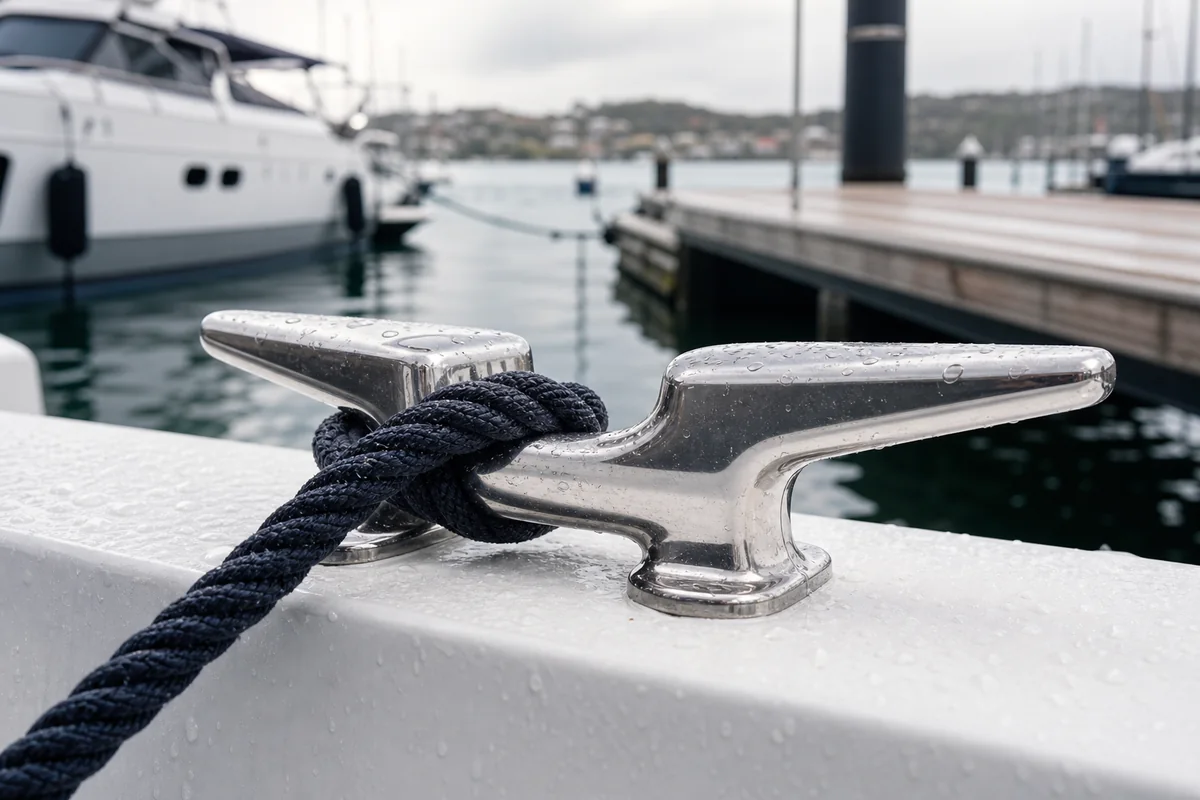
For ships, docks, outdoor coastal equipment, and marine engineering components, 316 or 316L stainless steel should be given priority. While ordinary 304 stainless steel may not necessarily fail immediately at sea, prolonged exposure to salt spray, humidity, and salt accumulation in crevices can quickly cause surface rust to appear. For marine environment stainless steel parts requiring high aesthetic and lifespan standards, 316L is generally more suitable.
For chemical equipment, pump and valve fittings, and fluid components, the selection needs to be based on the media composition, temperature, concentration, and cleaning method. For weakly corrosive media, 304 stainless steel can be initially evaluated; for chlorine-containing, acidic, or salt spray conditions, 316/316L is preferred. For export to European and American markets, the common choice is to follow the drawing standards, such as ASTM, AISI, EN, or the customer's internal grade requirements. If the customer does not specify a material, the supplier should proactively provide suggestions on stainless steel material selection and explain the differences in cost and risk between 304, 316, and 316L. For information on material grades in different countries, please refer to the website.Metal Material Grade Comparison Table。
How to select materials for precision castings
When selecting stainless steel precision castings, one should not only consider the unit price of the material, but also the part's structure, wall thickness, machining allowance, surface treatment, welding requirements, and service environment. For general mechanical supports, food machinery parts, building hardware, fixtures, and general pump and valve accessories, 304 precision castings usually meet the requirements; for marine hardware, coastal equipment, chemical fluid components, and parts where customers require higher corrosion resistance, 316 or 316L are more suitable.
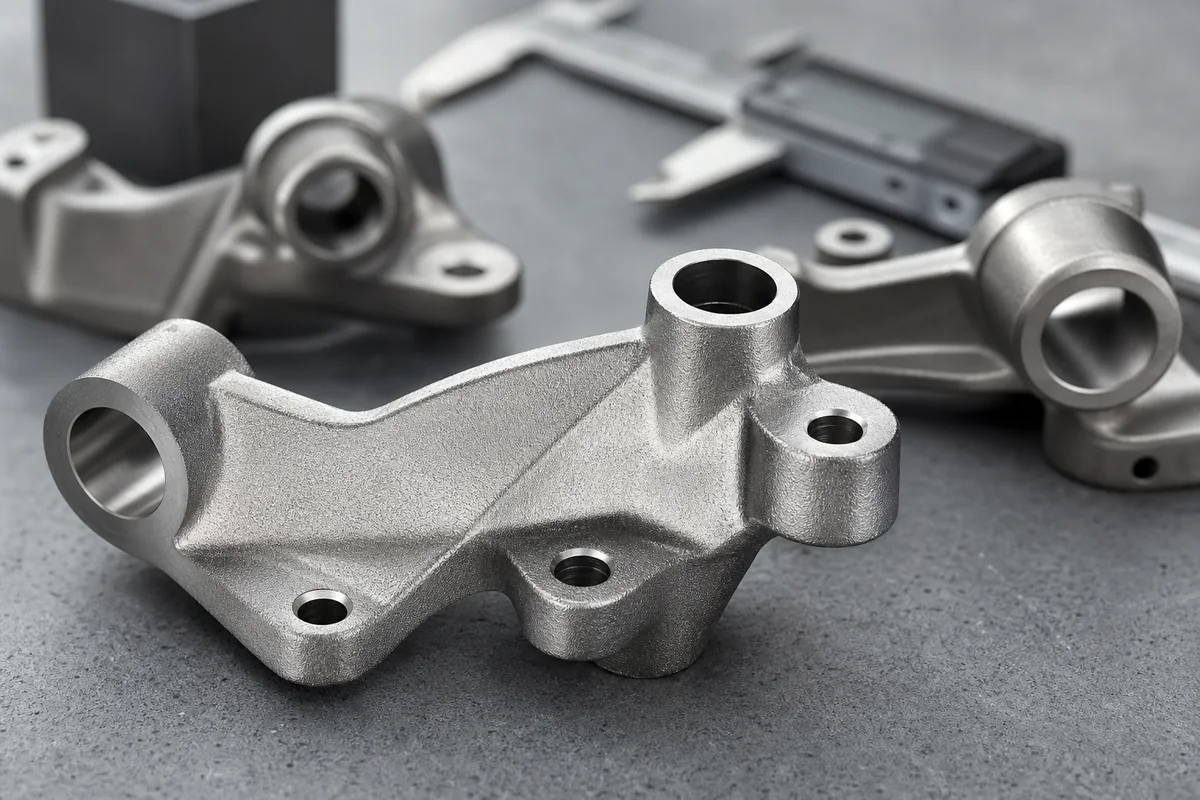
For parts requiring welding, pickling and passivation, or prolonged exposure to humid or salt spray environments, 316L precision castings are often more stable than 316L. If the parts require subsequent CNC machining, the machined surfaces, datum surfaces, and casting shrinkage should also be considered during the design phase. For parts with high requirements for appearance or mating surfaces, silica sol casting typically yields better surface quality and dimensional stability; relevant process differences can be found in [reference needed].The difference between silica sol process and water glass processIf the project involves batch precision casting and machining of stainless steel, it can be combined with...CNC machining of stainless steel precision casting mechanical partsPage evaluation process route.
Regarding the material selection process, it is recommended to first confirm the usage environment, then confirm the standard grade, and finally calculate the cost. The purchasing side should not only ask "How much does 304 cost?" or "How much does 316 cost?", but should also specify whether the location is near the sea, whether welding is required, whether it will be exposed to salt water or chemical media, whether it will be exported to Europe or America, and whether a material report is required. The engineering side should clearly specify the material grade, applicable standards, surface treatment methods, and acceptance criteria in the drawings to avoid the supply chain substituting materials based on experience.
Frequently Asked Questions (FAQ)
Q1: Will 304 stainless steel rust?
Yes. 304 stainless steel is not absolutely rust-proof, but rather rust-resistant. However, prolonged exposure to salt spray, humidity, iron powder contamination, chlorine-containing cleaning agents, or liquid accumulation in crevices can still lead to rust spots and pitting. For more rust prevention strategies, please refer to [link/reference].Will stainless steel rust? Selection and rust prevention methods for 304/316L/2205 stainless steel.。
Q2: Is 316 definitely better than 304?
Not necessarily. 316 stainless steel has better resistance to chloride ion corrosion than 304, but it is more expensive. If the operating environment is ordinary, 304 may already meet the lifespan requirements. The correct selection of stainless steel material should be based on the environment, lifespan, standards, and budget.
Q3: Can 316L replace 316?
This is acceptable in most engineering scenarios, especially for welded parts, corrosion-resistant parts, and export parts. However, if the drawings, contract, or customer standards explicitly require 316, it should be confirmed first whether a replacement is permissible.
Q4: How long can 304 stainless steel last at the beach?
There is no fixed answer. Factors such as distance from the coast, salt spray concentration, rain erosion, surface roughness, and salt accumulation in crevices all affect the results. For long-term outdoor, dockside, or marine applications, it is recommended to directly evaluate 316 or 316L.
Q5: Is food-grade stainless steel always 304?
Not necessarily. 304 is one of the most common materials used in food processing equipment, but 316 and 316L can also be used in food, pharmaceutical, and high-salt media equipment. The key is that the material, surface condition, and the actual media meet the requirements for food contact.
Summarize
The selection of 304, 316, and 316L stainless steel can be summarized in one sentence: 304 is preferred for ordinary environments, 316 for salt spray and chloride ion environments, and 316L for welding and high corrosion resistance requirements. 304 stainless steel excels in mature supply, reasonable cost, and strong versatility; 316 stainless steel excels in its improved pitting corrosion resistance due to the addition of molybdenum; and 316L stainless steel excels in its weld stability and resistance to intergranular corrosion due to its low carbon content. For procurement and engineering teams, rational material selection is not about choosing the "most expensive material," but about finding a balance between lifespan, risk, standards, and cost.
Xinghua Haijin Stainless Steel Products Factory specializes in stainless steel precision casting, silica sol casting, CNC machining, and custom metal parts manufacturing, and can provide solutions for various materials such as 304, 316, 316L, 2205, and 2507.
Relevant technical information and product examples
Continue to assess whether the materials, workmanship, and actual parts are suitable for your procurement needs.
- ResourcesComparison of CF8, CF8M, CF3, CF3M with 304 and 316 grades→
- Material Selection GuideHow to choose between 304, 304L, 316, and 316L stainless steel castings→
- Material comparisonWhat are the differences between CF8 and CF8M?→
- Product ExamplesStainless steel mechanical parts casting and CNC machining→
Material and operating condition confirmation
Unsure which stainless steel casting grade to choose?
Please send us drawings and the usage environment. We will take into account corrosion, temperature, strength, processing, and cost requirements to help us determine the most suitable materials and processes.
- Check common terms and casting standards.
- Determining materials by combining medium, temperature and pressure
- Simultaneous confirmation of heat treatment, testing, and certification documents
 WhatsApp: +86 158 9600 2001Scan the QR code or open WhatsApp to chat


