











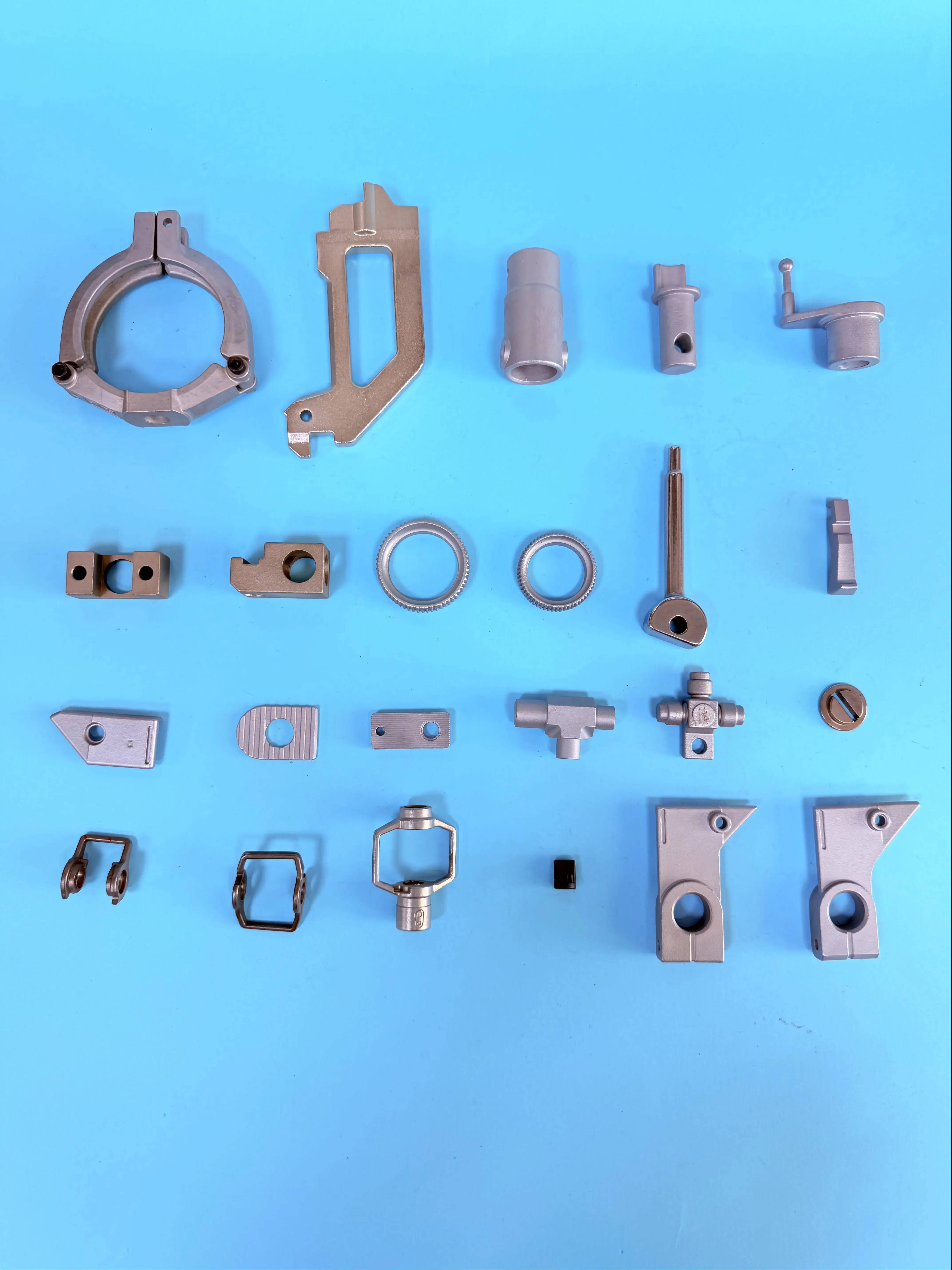
In modern manufacturing, stainless steel mechanical parts are widely used in various fields due to their excellent corrosion resistance, high strength, and good machinability. Casting, as an important forming process, can transform stainless steel materials into parts of various complex shapes to meet the needs of different industries. This article will detail the casting process, key technologies, quality control, and application areas of stainless steel mechanical parts.
I. Stainless Steel Mechanical Parts Casting Production Process
(a) Mold making
- Design moldMold design is based on factors such as the shape, size, precision requirements, and batch size of the stainless steel parts to be cast. The design process must consider many details, including the location of the parting line, the placement of the gate and risers. For example, if casting a stainless steel valve with a complex internal cavity, the mold design must ensure that the internal cavity structure can be completely formed.
- Selection of materials for mold makingMolds can be made from a variety of materials. For small-batch production or castings with simple shapes, wood and plaster are commonly used materials; for mass production and castings with high precision requirements, metal molds, such as cast iron and steel, are generally used. For example, cast iron molds can withstand higher pressure and temperature, ensuring that the mold maintains its shape accuracy after multiple uses.
- Machining moldsThe mold material is machined into the designed shape using mechanical processing methods (such as turning, milling, grinding, etc.). For molds with complex shapes, advanced technologies such as electrical discharge machining and CNC machining may also be required to ensure the precision and surface quality of the mold.
(ii) Smelting stainless steel
- Raw material preparationSelect suitable stainless steel raw materials, such as stainless steel scrap and stainless steel ingots. The quality of the raw materials directly affects the performance of the castings, so it is essential to strictly control the impurity content in the raw materials.
- Selection of smelting equipmentCommonly used smelting equipment includes medium-frequency induction furnaces and electric arc furnaces. Medium-frequency induction furnaces have a fast heating speed and high thermal efficiency, making them suitable for smelting small to medium batches of stainless steel; electric arc furnaces are suitable for smelting large castings.
- Melting process controlDuring the smelting process, factors such as temperature, time, and furnace atmosphere need to be carefully controlled. The smelting temperature for stainless steel is generally around 1500–1600°C. Simultaneously, to prevent oxidation and gas absorption during smelting, suitable covering agents and refining agents are required. For example, using a fluorite-limestone covering agent can effectively isolate air and reduce oxidation.
(III) Casting
- Preparation before pouringBefore pouring, the mold needs to be preheated to reduce the cooling rate of the casting and prevent defects such as cold shuts and incomplete pouring. The preheating temperature is generally around 200-400°C. At the same time, it is necessary to ensure that the gating system (including the pouring cup, sprue, runner, and ingate) is unobstructed.
- pouringThe molten stainless steel is slowly and steadily poured into the mold cavity through the gating system. The pouring speed should be moderate; too fast a speed may cause defects such as air entrapment and sand erosion, while too slow a speed may result in incomplete filling. For example, for thin-walled stainless steel castings, the pouring speed should be appropriately increased to ensure that the molten stainless steel fills the mold cavity.
(iv) Solidification and Cooling
- Solidification controlAfter molten stainless steel is poured into the mold, its solidification process must be controlled. Depending on the shape and size of the casting, different solidification methods can be used, such as sequential solidification or simultaneous solidification. Sequential solidification is suitable for castings with significant differences in wall thickness. By properly setting risers and chills, the casting solidifies in a specific sequence, effectively preventing defects such as shrinkage cavities and porosity.
- Cooling processAfter the casting solidifies, it must be cooled appropriately. Generally, natural cooling or controlled cooling rate methods are used. For castings with complex shapes or large dimensions, controlling the cooling rate is particularly important to avoid internal stress and cracks caused by excessively rapid cooling.
(v) Demolding and cleaning
- DemoldingOnce the casting has cooled to a certain temperature, it can be demolded. The demolding method depends on the type of mold and the shape of the casting. For simple molds, demolding can be done by tapping or ejecting; for complex molds, specialized demolding equipment may be required.
- Cleaning castingsAfter demolding, the surface of the casting will have some defects such as gate and riser residues and adhering sand. These need to be cleaned using methods such as cutting, grinding, and sandblasting. For example, gas cutting can be used to remove gate and riser residues, and sandblasting can be used to clean the adhering sand from the casting surface to obtain a casting with a smooth surface.
(vi) Post-processing
- Heat treatmentTo improve the mechanical properties and corrosion resistance of stainless steel castings, heat treatment is usually required. Common heat treatment methods include solution treatment and aging treatment. Solution treatment can dissolve the alloying elements in stainless steel, improving its corrosion resistance and toughness; aging treatment can further improve the strength of the casting.
- Surface treatmentDepending on the specific application requirements, stainless steel castings can undergo surface treatments such as polishing, passivation, and electroplating. Polishing can improve the surface finish of the castings and enhance their appearance quality; passivation can form a dense oxide film on the surface of the castings, improving their corrosion resistance; electroplating can impart other special properties to the castings, such as wear resistance and decorative properties.
II. Key Technologies for Stainless Steel Mechanical Parts Casting Production
(a) Smelting technology
Stainless steel contains various alloying elements, such as chromium, nickel, and molybdenum. The addition of these elements gives stainless steel its excellent properties, but also increases the difficulty of smelting. During the smelting process, the content of various alloying elements needs to be precisely controlled to ensure that the performance of the casting meets requirements. At the same time, smelting temperature and time must be strictly controlled to avoid the loss and segregation of alloying elements. Furthermore, using advanced smelting equipment and refining technologies, such as vacuum melting and electroslag remelting, can effectively improve the purity and quality of stainless steel.
(II) Casting process
- Sand castingSand casting is one of the most commonly used casting processes, offering advantages such as low cost and high adaptability. In the casting of stainless steel mechanical parts, sand casting is suitable for producing castings of various shapes and sizes. However, sand casting also has some disadvantages, such as poor surface quality and low dimensional accuracy. To improve the quality of sand casting, some advanced process measures can be adopted, such as using high-quality molding sand, optimizing the gating system, and controlling the cooling rate.
- Investment castingInvestment casting, also known as lost-wax casting, is a high-precision casting process. It can produce complex castings with high dimensional accuracy and good surface finish, and is particularly suitable for manufacturing stainless steel mechanical parts for aerospace, medical devices, and other fields. The key to investment casting lies in the production of the wax model and the preparation of the mold shell. It is essential to ensure the dimensional accuracy and surface quality of the wax model, while simultaneously ensuring that the mold shell has sufficient strength and permeability.
- Centrifugal castingCentrifugal casting is a casting process that utilizes the centrifugal force generated by rotation to fill the mold cavity and solidify molten stainless steel. It is suitable for manufacturing ring-shaped, tubular, and other rotating castings, effectively improving the density and mechanical properties of the castings. During centrifugal casting, parameters such as rotation speed, pouring temperature, and time must be carefully controlled to ensure the quality of the castings.
(III) Quality Control Technology
- Chemical composition detectionChemical composition is one of the key factors affecting the performance of stainless steel mechanical parts. During the production process, rigorous chemical composition testing of raw materials and castings is necessary to ensure they meet standard requirements. Commonly used testing methods include spectral analysis and chemical titration.
- Nondestructive testingNon-destructive testing (NDT) is a non-destructive testing method that can detect internal defects in castings, such as porosity, cracks, and inclusions. Commonly used NDT methods include ultrasonic testing, radiographic testing, and magnetic particle testing. Through NDT, defects in castings can be detected promptly, allowing for appropriate repair measures and improving the quality and reliability of the castings.
- Mechanical property testingMechanical properties are one of the important indicators for evaluating the quality of stainless steel mechanical parts. Mechanical property tests, such as tensile tests, impact tests, and hardness tests, must be performed on castings to ensure that their mechanical properties meet design requirements.
III. Application Areas of Stainless Steel Mechanical Parts Casting Production
(I) Machinery Manufacturing Field
Stainless steel mechanical parts are widely used in the machinery manufacturing industry, such as pump bodies, valve bodies, pipe joints, gears, and shafts. These parts need to have good strength, corrosion resistance, and wear resistance to ensure the normal operation of mechanical equipment.
(II) Chemical Industry
In the chemical industry, stainless steel mechanical parts are commonly used to manufacture chemical reactors, pressure vessels, storage tanks, pipelines, etc. Due to the complex environment of chemical production and the presence of various corrosive media, the corrosion resistance requirements for stainless steel parts are extremely high.
(III) Medical Device Field
Medical devices have stringent safety and hygiene requirements, and stainless steel, due to its non-toxic, odorless, and corrosion-resistant properties, has become an ideal material for manufacturing them. Many medical devices, such as surgical instruments, dental instruments, and implants, are cast from stainless steel.
(iv) Food processing sector
Food processing equipment needs to meet the requirements of being easy to clean and corrosion resistant. Stainless steel mechanical parts are widely used in the food processing field, such as parts for food processing machinery, kitchen utensils, and tableware.
(v) Construction sector
In the construction industry, stainless steel mechanical parts can be used in building water supply and drainage pipes, fire-fighting equipment, and decorative materials. The corrosion resistance and aesthetic appeal of stainless steel give it unique advantages in architectural decoration.
IV. Development Trends in Stainless Steel Mechanical Parts Casting Production
(I) Digitalization and Intelligentization
With the development of information technology, digital and intelligent technologies will be gradually applied to the casting production process of stainless steel mechanical parts. By establishing digital models, the casting process can be simulated and optimized, improving production efficiency and product quality. At the same time, by utilizing intelligent equipment and control systems, automated control and real-time monitoring of the production process can be achieved, reducing production costs and labor intensity.
(II) Green and environmentally friendly
With increasing environmental awareness, green and environmentally friendly practices have become a development trend in the casting production of stainless steel mechanical parts. Adopting environmentally friendly raw materials, smelting equipment, and casting processes to reduce emissions of waste gas, wastewater, and slag, and to achieve resource recycling, is a crucial issue facing casting enterprises.
(III) High-performance materials and complex structure manufacturing
To meet the increasingly demanding performance requirements of various industries for stainless steel mechanical parts, the development of high-performance stainless steel materials and the manufacture of parts with complex structures will be the future direction. This involves developing stainless steel materials with higher strength, corrosion resistance, and wear resistance through methods such as adding trace elements and optimizing alloy composition. Simultaneously, advanced casting processes and technologies, such as 3D printing and composite casting, will enable the integrated manufacturing of complex structural parts.
In summary, the casting production of stainless steel mechanical parts is a complex process involving multiple stages and key technologies. With continuous technological advancements and evolving market demands, the casting production technology for stainless steel mechanical parts will continue to innovate and develop, providing stronger support for the development of modern manufacturing.
Relevant technical information and product examples
Continue to assess whether the materials, workmanship, and actual parts are suitable for your procurement needs.
- Tolerance dataComparison of CNC Machining Tolerance Standards and Selection→
- Tolerance dataInternational tolerance standard for CNC machining: ISO 2768→
- Surface requirementsComparison of Ra, Ry, Rz with polishing treatment→
- Product ExamplesCNC machining of stainless steel precision casting mechanical parts→
Size and processing assessment
Are there any critical dimensions or CNC machining requirements?
Please provide drawings, materials, quantities, and key tolerances. We will conduct an evaluation based on the condition of the blank, clamping method, processing steps, and inspection requirements.
- Confirm machining datum and clamping method
- Evaluate hole positions, threads, and mating surface tolerances.
- Coordinate casting blanks with CNC machining allowances
 WhatsApp: +86 158 9600 2001Scan the QR code or open WhatsApp to chat


