Supports provided drawings and samples; 24-hour response.
Supports provided drawings and samples; 24-hour response.

June 17, 2026
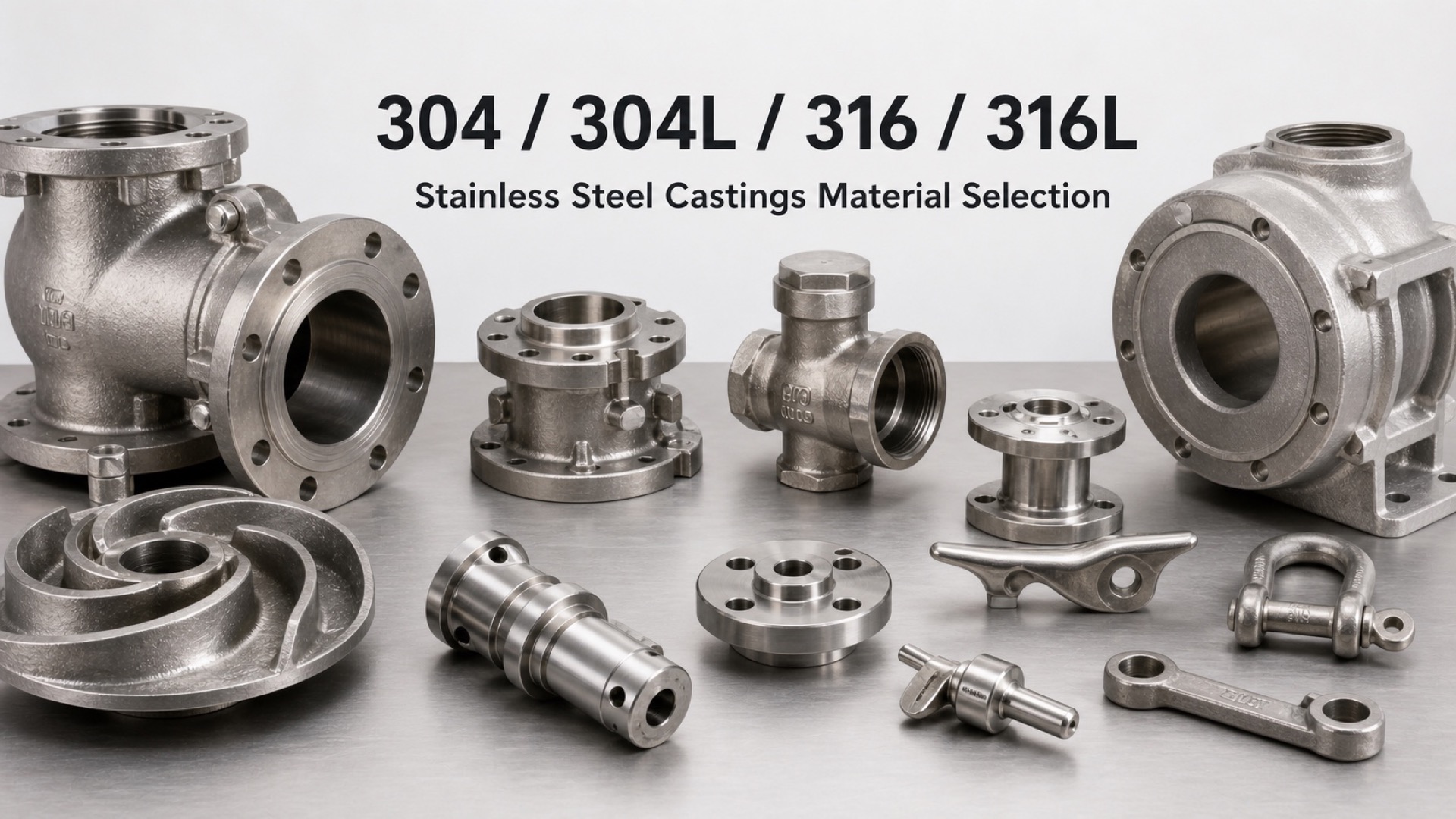
304, 304L, 316, and 316L are commonly used materials in stainless steel castings. This article analyzes how to select different stainless steel precision casting materials from the perspectives of corrosion resistance, weldability, cost, application scenarios, and casting processing.
June 17, 2026
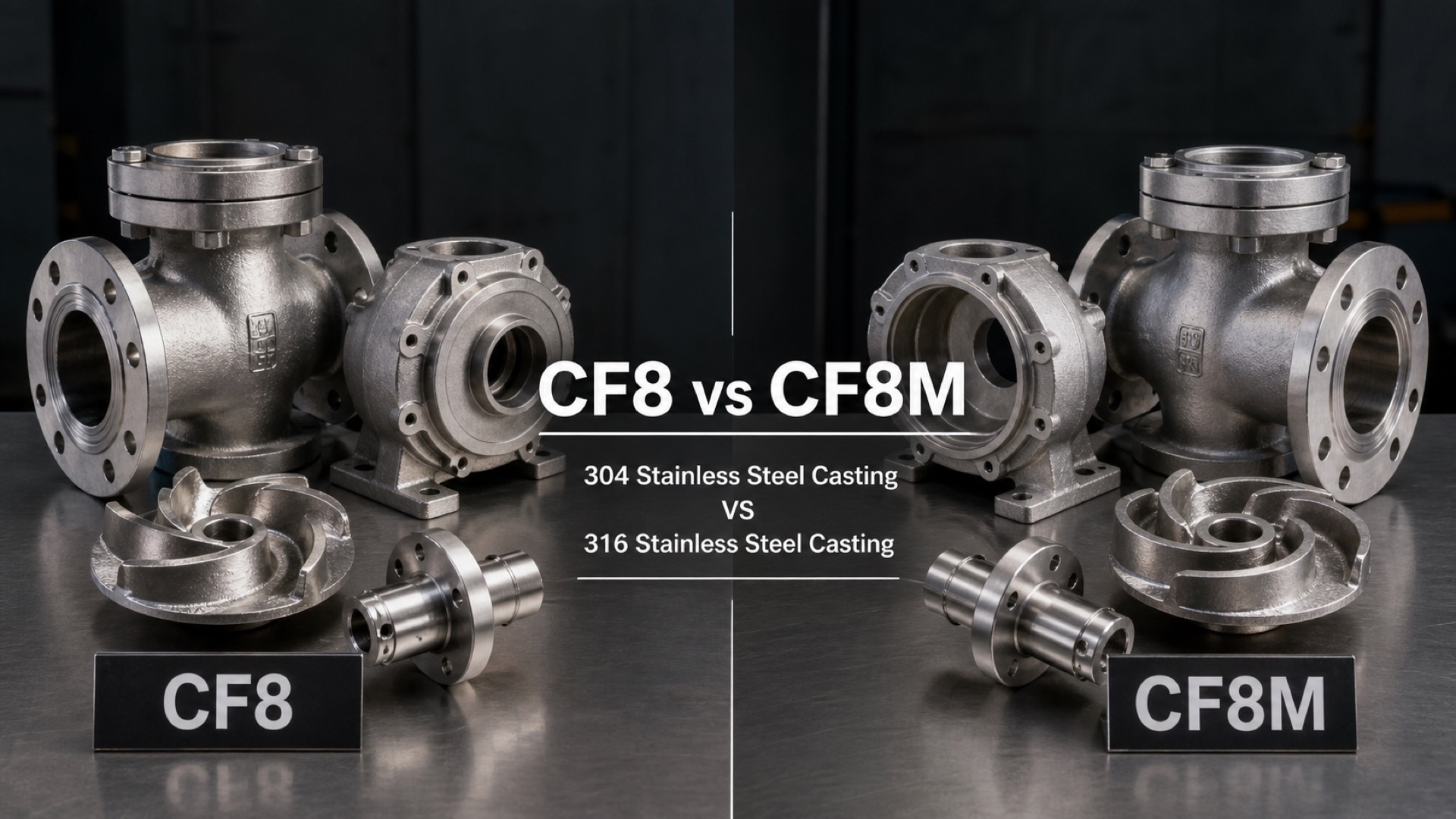
CF8 corresponds to 304 stainless steel, while CF8M corresponds to 316 stainless steel. This article details the differences between CF8 and CF8M in terms of corrosion resistance, mechanical properties, applications, and cost, helping you choose the appropriate stainless steel precision casting material.
June 8, 2026
In procurement drawings, BOM lists, or customer inquiries, 304, 316, and 316L stainless steel are often compared together. They are all austenitic stainless steels, appear similar, and have similar processing methods, but they are not entirely the same in terms of corrosion resistance, welding risks, material costs, and applicable environments. For procurement engineers, mechanical engineers, product design engineers, and purchasing managers of equipment manufacturing companies, choosing the wrong material can affect component lifespan, export certification, after-sales risks, and overall machine reliability. Contents: What is 304 Stainless Steel? 304 stainless steel is the most widely used austenitic stainless steel, typically composed of approximately 18% of chromium and 8% of nickel, hence it is also often called 18-8 stainless steel. It has balanced overall performance, good atmospheric corrosion resistance, mature cold working and welding properties, stable material supply, and relatively controllable prices, making it a popular choice for many food processing machinery, general machinery, building hardware, and stainless steel precision machinery…
June 5, 2026
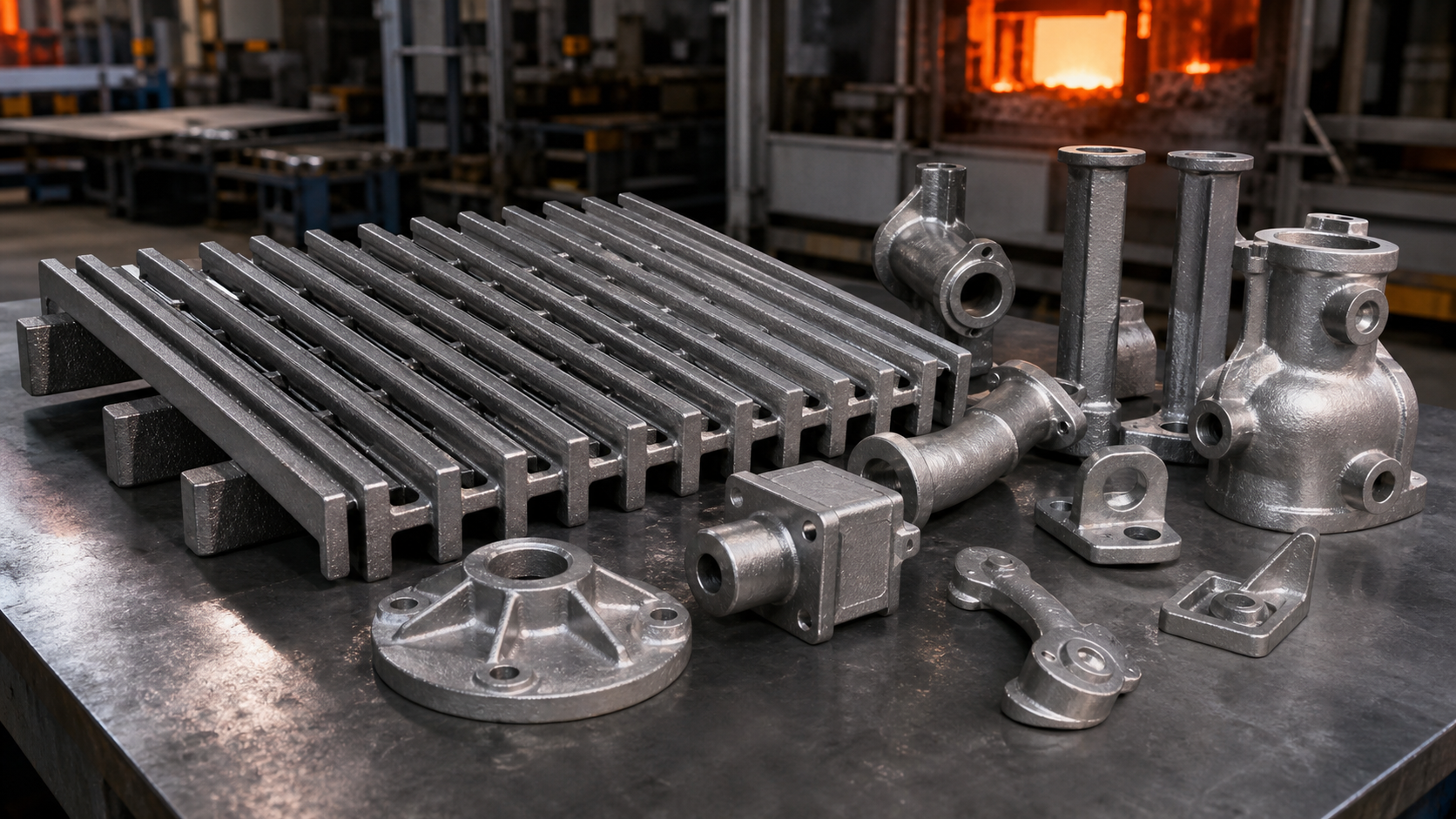
310S (2520) high-temperature resistant stainless steel castings are commonly used in heat treatment, furnaces, conveying, and high-temperature machinery applications. When commissioning high-temperature resistant stainless steel castings, many customers initially ask, "Do you have 310S? Can you make 2520?" However, once prototyping and mass production begin, the issue often shifts beyond just the material; it becomes whether the casting can withstand long-term stable use under high temperatures, oxidation, thermal cycling, and assembly loads. Haijin Foundry, when undertaking 310S (2520) heat-resistant steel casting projects, considers the material, structure, process, and subsequent processing together, rather than simply casting the shape according to the drawings. Why is 310S (2520) suitable for high-temperature castings? 310S, often referred to as 2520 heat-resistant stainless steel, is characterized by its high chromium and nickel content. Chromium helps form a more stable oxide film in high-temperature oxidizing environments, while nickel improves the stability of the austenitic structure and high-temperature toughness. For furnace parts, heat treatment…
June 5, 2026
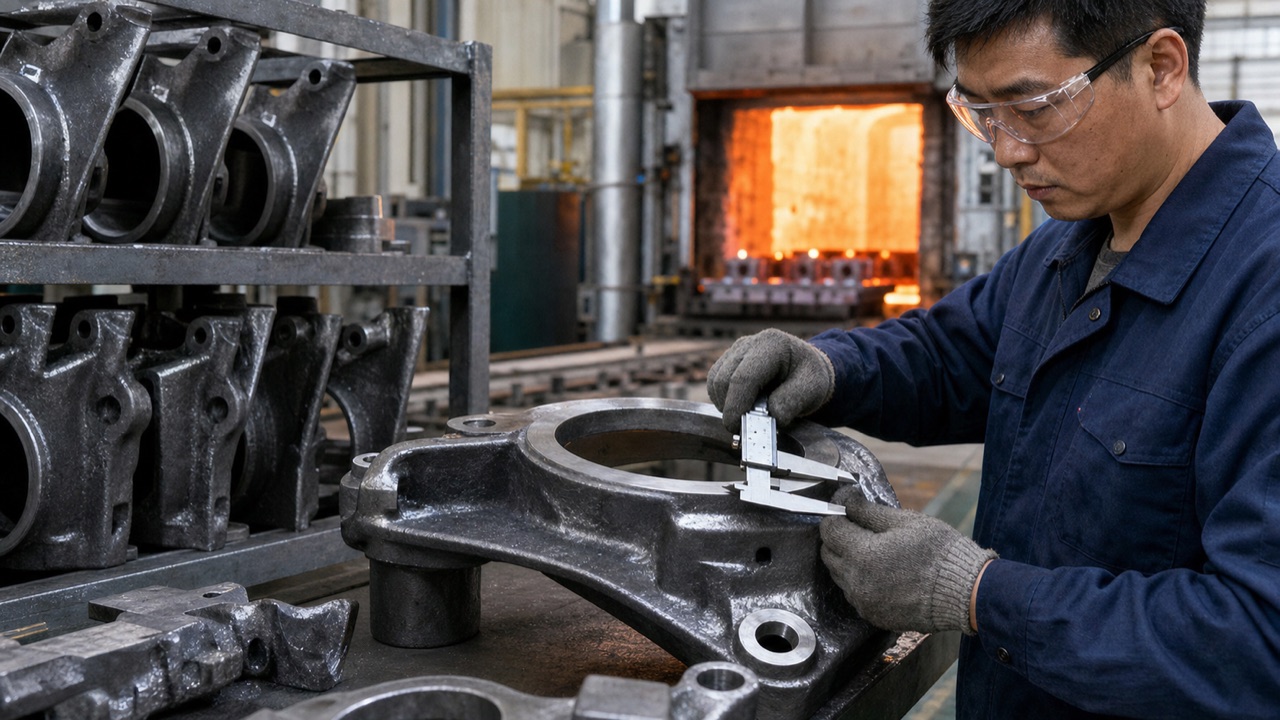
40Cr is a medium-carbon low-alloy structural steel. The addition of chromium allows the material to achieve a relatively balanced performance between strength, hardenability, and wear resistance. When using 40Cr in cast steel parts, it doesn't rely solely on carbon content to increase strength like ordinary carbon steel, nor is it as expensive as high-alloy steel. Therefore, it has high practical value in medium load, impact wear, and complex-shaped parts. I. Material Characteristics of 40Cr Cast Steel Parts The typical carbon content of 40Cr is approximately between 0.371 TP3T and 0.441 TP3T, and the chromium content is generally between approximately 0.801 TP3T and 1.101 TP3T. The core function of this composition design is to improve hardenability and tempering stability while maintaining a certain level of toughness. For cast steel parts, the wall thickness is often not completely uniform. Local hot spots, stiffeners, holes, and corners can cause differences in microstructure. Compared to ordinary 45 steel, 40Cr is more likely to obtain a more uniform quenched and tempered microstructure over larger cross-sections. After appropriate heat treatment…
May 29, 2026
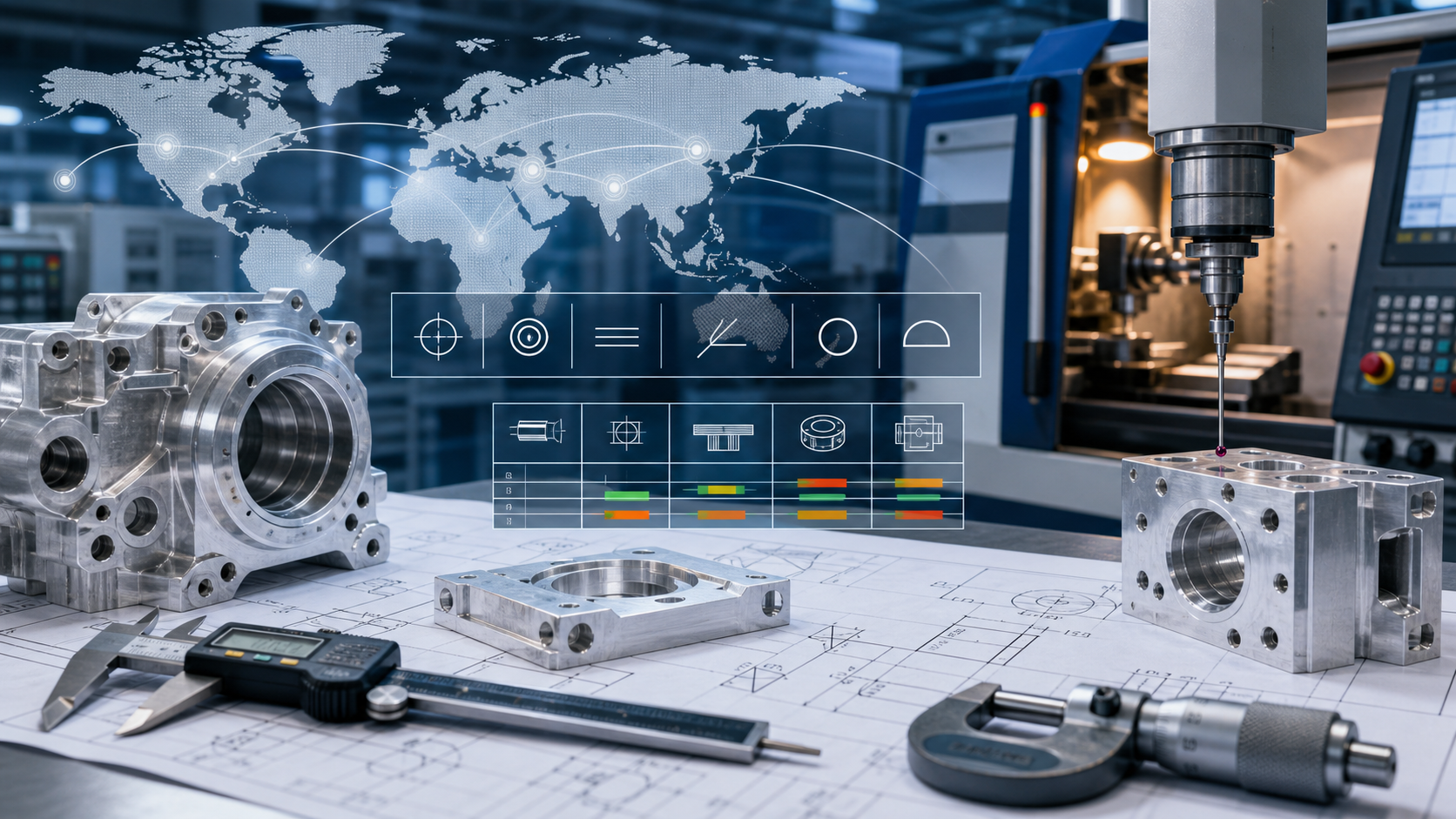
This system systematically reviews common tolerance standards for CNC machining, including ISO 2768, ISO 286, ISO 1101, GB/T, JIS, DIN, ASME Y14.5, ASME B4.1, and BS 8888, and uses a comparison table to illustrate the applicable scenarios of different systems.
May 29, 2026
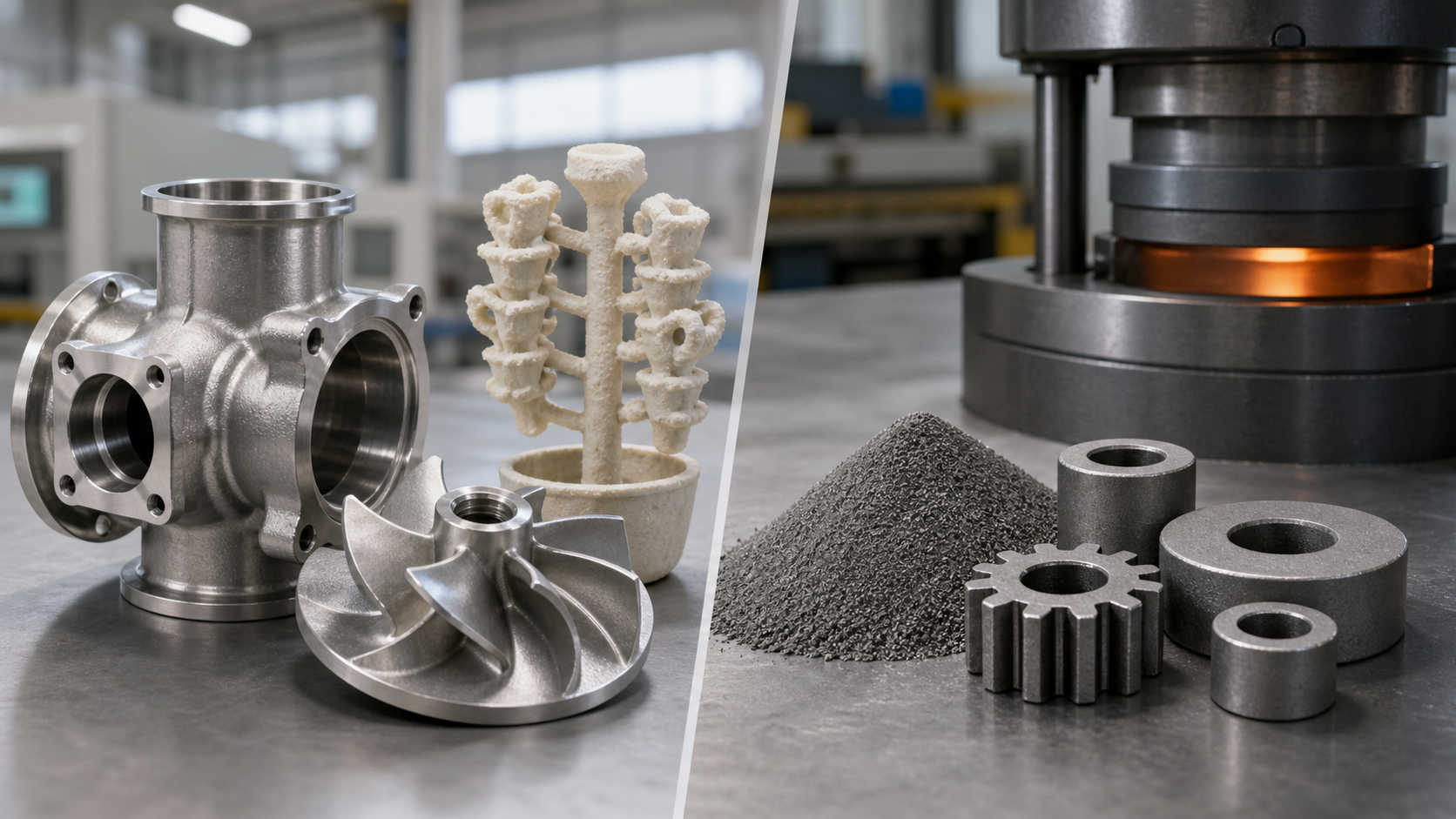
Precision casting and powder metallurgy are not about "which is more advanced," but rather two completely different forming methods. One solidifies from liquid metal, excelling at complex three-dimensional structures and high-strength metal parts; the other presses and sinterstens metal powder, excelling at producing small parts with stable batches and consistent dimensions. When making a selection, one cannot only look at the unit price, but also at the materials, stress, sealing performance, post-processing, export certification, and the total cost of the entire project. First, the process principles differ: casting is "melted out," while powder metallurgy is "pressed out and then sintered." Precision casting usually refers to investment casting. First, a wax model is made, then a resin model is assembled, a shell is made, dewaxed, and fired. Then, molten metal such as stainless steel, carbon steel, or alloy steel is poured into the shell, and after cooling, a blank close to the finished product shape is obtained. Its key lies in the precision of the mold shell, the gating system, the feeding of the molten metal, and subsequent heat treatment. Powder metallurgy, on the other hand, mixes metal powder with necessary lubricants, forming aids, or binder systems…
May 29, 2026
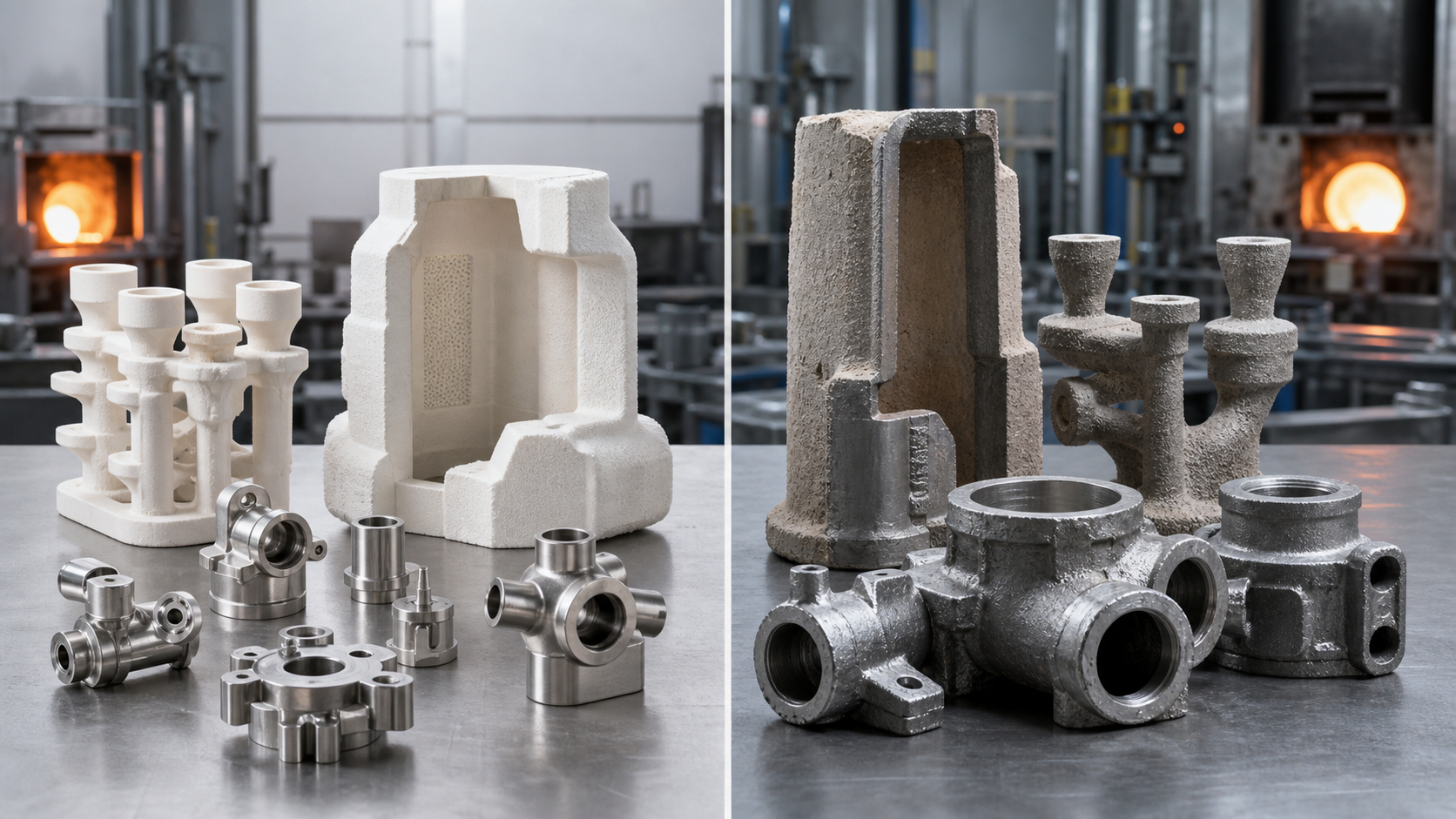
In inquiries about stainless steel precision casting, customers often ask: Why do some quotes use "silica sol" while others use "water glass" for lost-wax casting? This isn't just a simple difference in terminology; the shell material, dimensional stability, surface quality, post-processing costs, and suitable products are completely different. Choosing the wrong process can lead to anything from larger machining allowances and more surface rework to failing to meet dimensional and airtightness requirements. In short: The core difference between the two processes is that the silica sol process uses silica sol as a binder, resulting in better shell strength and thermal stability, and a finer shell surface, making it suitable for castings with high requirements for dimensional accuracy, surface roughness, and material consistency. The water glass process uses water glass as a binder, resulting in lower process costs and a relatively shorter production cycle, making it more suitable for medium to large castings with simpler structures, less demanding surface finishes, and requiring extensive machining or sandblasting for corrosion protection. A table comparing silica sol and water glass can help you understand the differences.
May 27, 2026
2520 (310S) high-temperature resistant stainless steel castings are suitable for furnace tooling, heat treatment trays, and high-temperature equipment accessories. This article compares 304, 316, and 309S materials to explain the high-temperature advantages, application scenarios, and selection considerations of 310S.
Enter the material, product name, or processing technology, such as "316L impeller" or "silica sol casting".